 PlaceBee

Introduction to Space Training for Extreme Adventure Travel
Space tourism is emerging as the ultimate extreme sport in 2026, blending cutting-edge technology with the thrill of adventure travel. Participants undergo rigorous astronaut-style training to prepare for suborbital or orbital flights, pushing physical and mental limits far beyond traditional activities. This guide explores adapted training routines designed for thrill-seekers, including detailed steps, comparisons, and practical advice. As commercial spaceflight becomes more accessible, understanding these programs helps enthusiasts prepare for frontiers where technology meets extreme sports.
The demand for such experiences has grown, with operators adapting NASA protocols for civilians. Training ensures participants can handle the unique stresses of launch, microgravity, and re-entry while maximizing safety and enjoyment. This comprehensive approach covers everything from daily workouts to psychological resilience, making space the next big step in adventure travel.
Physical Conditioning Steps
Training begins with intensive physical preparation to handle G-forces, microgravity, and high-altitude conditions. Start with cardiovascular endurance through interval running and swimming sessions that build stamina for sustained physical demands. Strength training focuses on core stability and leg power using resistance machines, free weights, and bodyweight exercises tailored to simulate spacecraft movements.
Flexibility routines incorporate yoga and dynamic stretches to prevent injuries during launch and re-entry. Typical programs progress over 4-6 weeks, incorporating centrifuge simulations and parabolic flights. These build tolerance to the stresses of space travel. Participants often follow personalized plans that include high-intensity interval training three times weekly alongside balance exercises on stability balls. Real-world examples show how former athletes adapt quickly, while beginners start with foundational mobility work before advancing to full simulations. Monitoring tools track heart rate variability to adjust intensity, ensuring progressive overload without burnout.
Mental Preparation Techniques
Mental resilience is crucial for handling isolation, sensory changes, and high-stakes environments. Techniques include mindfulness meditation to manage anxiety and visualization exercises simulating flight scenarios in detail. Cognitive training apps help improve focus under pressure, while team-building simulations foster communication skills essential in confined spacecraft environments. Operators emphasize psychological evaluations to ensure readiness, drawing from established astronaut protocols that include stress inoculation training and breathing exercises for calm during turbulence.
Daily journaling and scenario-based role-playing further enhance adaptability. Many programs integrate virtual reality headsets to rehearse emergency procedures, reducing fear responses. This mental layer distinguishes space training from shorter adventures and prepares individuals for the psychological frontiers of space tourism.
Comparisons to Traditional Outdoor Adventures Like Skydiving
Unlike skydiving, which lasts minutes and focuses on freefall adrenaline, space training extends over weeks and prepares for sustained microgravity and high-speed re-entry. Skydiving requires basic fitness, but space routines demand advanced endurance and zero-gravity adaptation. Both involve risk management, yet space travel integrates advanced tech like pressurized suits for enhanced safety. Thrill-seekers find space training offers deeper immersion in adventure frontiers, with longer preparation phases that build cumulative skills rather than one-off rushes.
For instance, skydiving emphasizes quick decision-making in freefall, while space programs train for prolonged exposure to weightlessness and spatial disorientation. The intensity levels differ significantly, with space conditioning requiring medical oversight similar to professional athletics. This comparison highlights why space represents an evolution in extreme sports, combining elements of skydiving with aviation and underwater training analogs.
Real Operator Examples
Leading companies include Virgin Galactic, which offers suborbital flights with pre-flight training including centrifuge and zero-gravity simulations. Blue Origin provides similar programs emphasizing safety through incremental exposure to flight conditions. NASA resources also inform commercial adaptations for civilian participants, offering public insights into astronaut selection and conditioning methods. Additional operators draw from these models to create hybrid programs blending fitness coaching with technical briefings.
Gear Checklists
Comprehensive preparation requires specialized equipment. Essential items include:
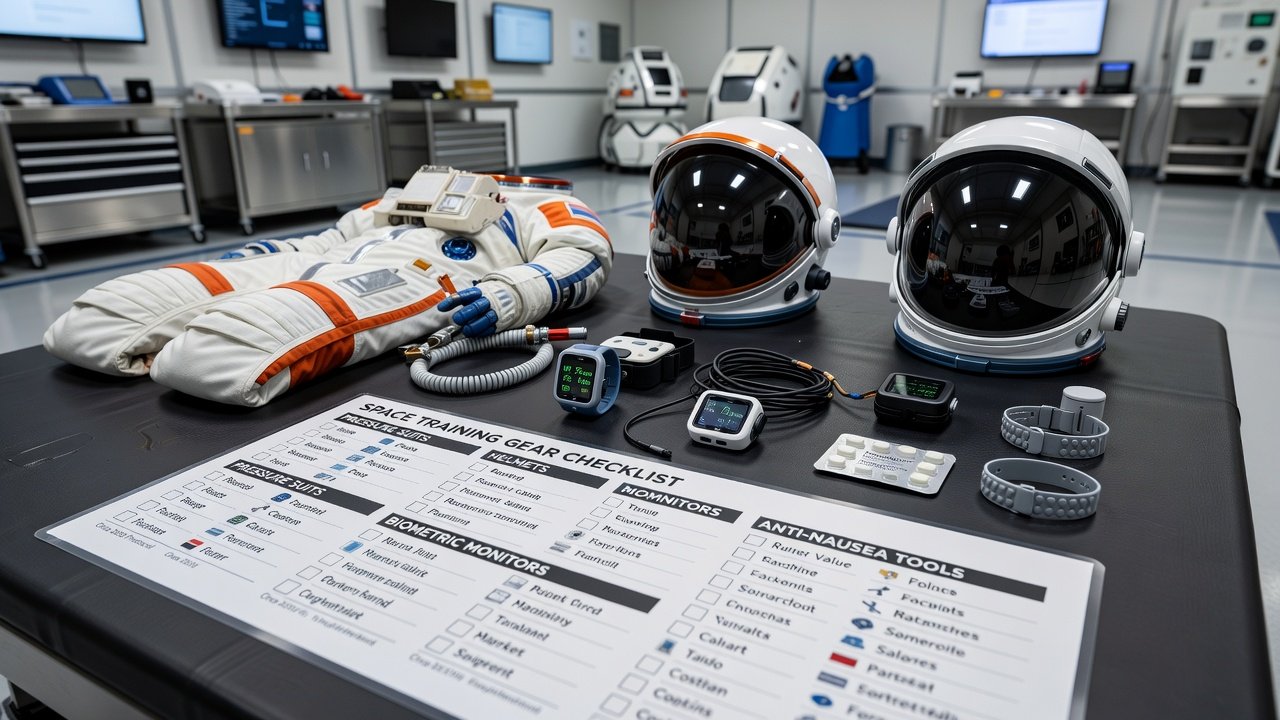
- Custom-fitted pressure suits and helmets for environmental protection
- Anti-nausea wristbands and hydration packs to maintain comfort
- Heart rate monitors and biometric sensors for real-time health tracking
- Lightweight thermal layers for temperature regulation in varying conditions
- Communication headsets for in-flight coordination with crew
- Emergency oxygen systems and first-aid modules
- Personal mobility aids like resistance bands for in-flight exercise
Operators supply most items, but participants should verify fit during initial assessments. Additional checklists cover pre-training nutrition supplements and post-flight recovery tools.
Safety Protocols and Risk Factors
Safety includes pre-flight medical screenings and emergency evacuation drills. Protocols cover decompression risks and motion sickness mitigation through graduated exposure. Key risks involve cardiovascular strain and radiation exposure, managed through monitored environments and insurance options. Detailed briefings address potential issues like barotrauma or spatial orientation challenges, with immediate medical support available throughout training.
Operators follow strict regulatory guidelines to minimize incidents, including redundant systems in simulators. Participants learn to recognize early warning signs of fatigue or discomfort, empowering proactive responses. This layered approach makes space training one of the safest high-adrenaline activities when protocols are followed.
Booking Considerations
Research operators thoroughly, review cancellation policies, and confirm health requirements. Training often occurs at specialized facilities with access to simulators. Consider timing around peak seasons for optimal availability. Practical steps include scheduling initial consultations, completing medical questionnaires, and preparing travel logistics for multi-week programs. Comparing operator reviews and success rates helps select the best fit for individual fitness levels.
FAQs on Health Requirements
What health conditions disqualify participants? Severe heart issues or uncontrolled high blood pressure typically prevent participation, alongside certain respiratory or neurological conditions.
Are there age limits? Most programs require participants to be 18-65 with medical clearance from approved physicians.
How does training address motion sickness? Through repeated exposure and medication protocols tailored to individual responses.
What fitness baseline is expected? A moderate level of cardiovascular fitness and strength is recommended before starting advanced simulations.
Conclusion
Space training routines equip adventurers for 2026's most exciting frontiers, merging extreme sports with technological innovation. By following structured physical and mental programs, participants can safely embrace this evolving adventure travel landscape and unlock new dimensions of thrill and discovery.
No comments yet. Be the first!