 PlaceBee

Introduction: Why Fact-Checking Matters for 2026 Travel
Post-pandemic travel conditions continue to evolve rapidly, making outdated information in destination guides a frequent pitfall for even experienced planners. Whether relying on city guides, country guides, or comprehensive destination guides, verifying details ensures your 2026 trip avoids unnecessary disruptions such as closed attractions, changed entry requirements, or inaccurate transport schedules. This in-depth guide provides proven methods to confirm accuracy across popular platforms, helping travelers build confidence in their research. By the end, you will have actionable checklists, real-world examples from Europe and Asia, and strategies to minimize exposure to misinformation that can derail a carefully planned journey.
Cross-Referencing Multiple Sources Effectively
Start by comparing information from at least three independent sources before accepting any single claim as accurate. For example, pull opening hours and ticket prices from a commercial guidebook and immediately check them against government advisories and recent traveler forums. This multi-source approach reveals discrepancies that single references often miss. Reliable starting points include official government portals such as travel.state.gov for U.S. citizens and comparable national travel sites for other nationalities. Always note the publication or update date of each source, because information that seemed current six months ago may already be obsolete for 2026 planning.
Step-by-Step Checklist for Cross-Referencing
- Extract the five most critical details from your primary guide: visa rules, attraction hours, local transport options, health requirements, and currency exchange guidance.
- Search the identical terms on two additional reputable platforms and record exact matches or contradictions.
- Flag any detail that differs by more than 10 percent and investigate the most recent update timestamp.
- Contact the destination’s official tourism board directly via email or verified social channels for final confirmation on ambiguous points.
- Document your findings in a simple spreadsheet so you can revisit them 30 days before departure.
Spotting Outdated Visa and Entry Rules
Visa policies and entry protocols shift frequently, especially in the post-pandemic era. Never rely solely on printed guidebooks or older digital editions. Instead, navigate directly to the embassy or consulate website of your destination country. For European travel, compare current Schengen Area requirements across multiple official sources and note any seasonal adjustments. In Asia, countries like Japan and Thailand frequently revise digital nomad visas and short-term tourist entry rules. A practical tip is to bookmark the official immigration page and recheck it within 30 days of travel, because even minor policy tweaks can affect your itinerary.
Evaluating User Reviews from Recent Trips
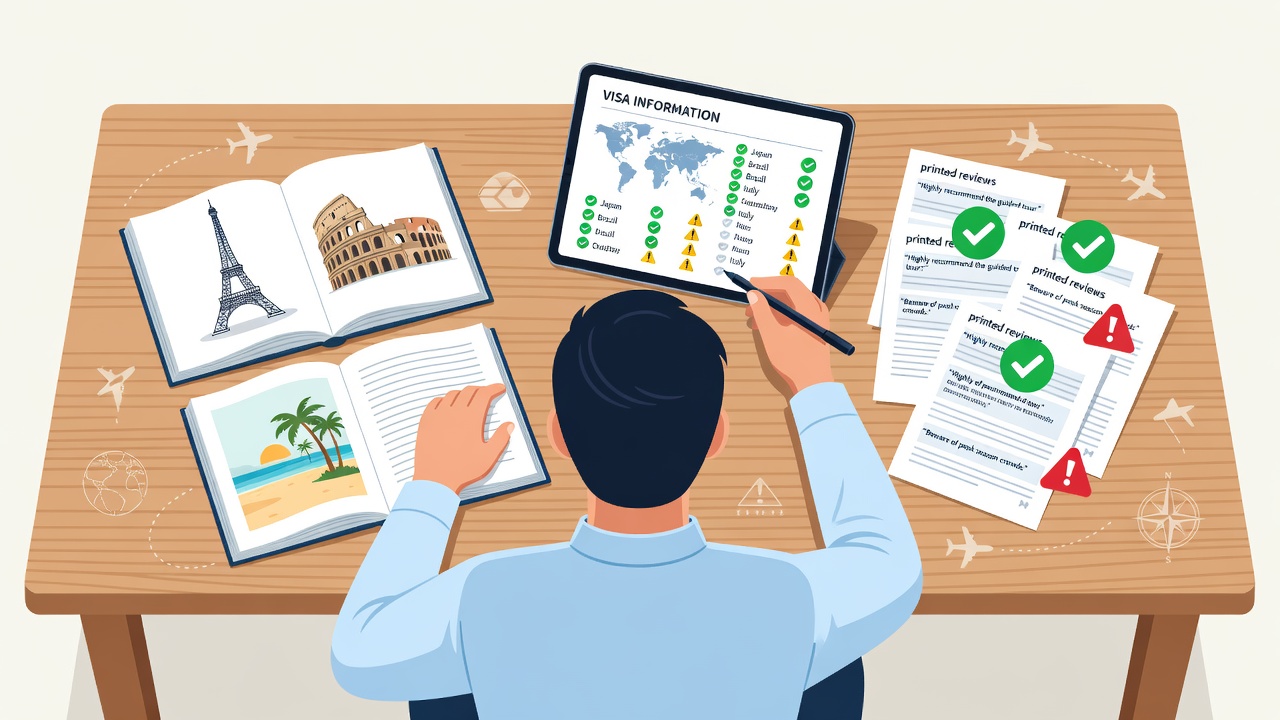
User-generated reviews remain valuable only when filtered for recency and specificity. Prioritize reviews posted within the last six months and look for detailed accounts that mention exact dates, crowd levels, and service changes. Platforms such as TripAdvisor allow date-based filtering, which separates timeless advice from temporary conditions caused by renovations or seasonal events. Watch for red flags including vague language, repeated complaints about the same issue, or reviews that appear incentivized. Cross-reference standout positive or negative experiences with photos uploaded by the reviewer to confirm authenticity before adjusting your plans.
Comparing Popular Guide Platforms
Lonely Planet provides rich cultural context and well-researched background but can lag on real-time operational updates. TripAdvisor shines when you need current user sentiment and recent photos, although its commercial partnerships require careful scrutiny. Wikivoyage offers free, community-edited entries that travelers can easily cross-check against primary sources. For the most authoritative data, national tourism websites deliver verified information on events, safety, and regulations. Comparing these platforms side-by-side reveals where each excels and where gaps appear, allowing you to assemble a balanced research set rather than depending on any single provider.
Practical Examples from European and Asian Destinations
Consider planning a 2026 visit to Paris. Cross-reference the Louvre’s opening hours from your main guide against the museum’s official website and recent visitor reports to avoid arriving during unexpected closures or peak-time restrictions. In Tokyo, verify Shinkansen schedules, temple access rules, and cashless payment options using both printed guides and updates from JR East. These verification steps prevent the common error of assuming pre-pandemic operating hours remain valid. Similar diligence applies to Bangkok, where floating market boat schedules and temple dress codes change with local regulations and tourism recovery patterns. Applying the same process to Rome or Seoul demonstrates how consistent fact-checking scales across continents.
Leveraging Official Tourism Sites
National tourism boards supply verified, up-to-date data on attractions, festivals, and health protocols. Combine these resources with international health guidance from www.who.int to create a complete picture. This layered approach dramatically reduces reliance on recycled or fabricated content found on lower-quality blogs. Many boards also maintain English-language sections with downloadable checklists and interactive maps that further streamline planning.
Common Misinformation Risks and How to Avoid Them
Travelers frequently encounter recycled information about closed attractions, incorrect transport timetables, and unverified visa exemptions. To mitigate these risks, establish a personal verification workflow that includes weekly checks of official sources during the final two months before departure. Avoid social media posts lacking verifiable dates or photographs, and treat any claim about “must-see” experiences with skepticism until confirmed by multiple channels.
Mistakes to Avoid When Fact-Checking
- Trusting a single source even if it appears professionally designed.
- Ignoring update timestamps on digital guides and reviews.
- Assuming visa rules remain static between booking and travel dates.
- Overlooking local-language sources that may contain more current details than English translations.
Conclusion
By applying these fact-checking strategies consistently, travelers can confidently prepare for 2026 journeys using accurate destination guides. Regular verification protects against rapidly evolving conditions and ultimately enhances overall trip satisfaction and safety.
FAQ
How often should I check visa rules before a 2026 trip?
Review them within 30 days of departure, as policies can change rapidly without much notice.
Are user reviews reliable for 2026 planning?
Only when filtered for recency and corroborated by official sources and multiple independent accounts.
What are the most common misinformation risks in destination guides?
Outdated attraction closures, incorrect transport schedules, and unverified visa exemptions rank highest among traveler complaints.
Should I still buy printed guidebooks for 2026 travel?
Printed books offer excellent cultural context but must be supplemented with real-time digital verification from official websites.
How can I verify health entry requirements?
Check both the destination’s ministry of health site and www.who.int for the latest guidance within one month of travel.


No comments yet. Be the first!