 PlaceBee
Introduction to 2026 Airport Security Variations
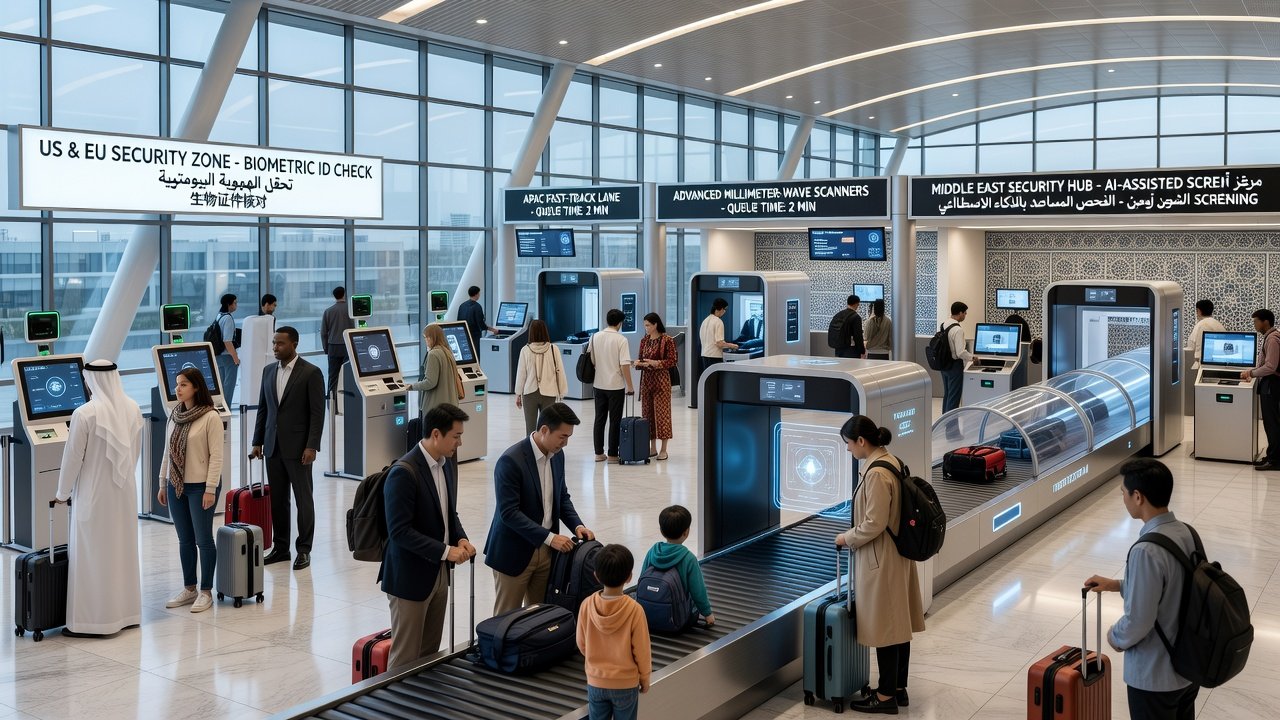
Airport security protocols continue to evolve in 2026, with regional differences creating both challenges and opportunities for frequent travelers. Understanding these variations helps optimize carry-on packing and reduce wait times at checkpoints worldwide. This guide compares rules in the US, EU, Asia-Pacific, and Middle East, drawing on official sources for accurate, practical advice. Travelers who adapt their workflows to each region report smoother experiences and fewer delays. For example, a business traveler flying from New York to Dubai can save 15-20 minutes by pre-organizing liquids differently than for an EU flight. Data from major hubs shows that informed passengers clear screening 30 percent faster on average by following region-specific best practices. The goal is to provide concrete, actionable insights rather than generic tips so you can prepare carry-ons efficiently no matter the destination. In addition, understanding peak hours and technology adoption rates across regions allows for better trip planning and reduced stress during international itineraries.
US Airport Security Protocols in 2026
Liquid Rules and Electronics Handling
The Transportation Security Administration maintains core standards while refining processes. Updated liquid rules allow the standard 3-1-1 bag but encourage clear quart-sized bags for faster scans. Electronics larger than a cell phone must typically be removed from bags and placed in separate trays. Pro tip: Use a dedicated electronics sleeve that opens flat to speed up the process at busy checkpoints like those in Chicago O'Hare or Los Angeles LAX. Another practical detail involves labeling your quart bag clearly with your name to avoid mix-ups during busy periods.
PreCheck Equivalent and Step-by-Step Workflow
TSA PreCheck remains the primary expedited option, with expanded enrollment centers. Step-by-step tip: Enroll online through the official program, complete an in-person interview, and use dedicated lanes at participating airports. This workflow typically reduces screening time to under five minutes when combined with organized packing. Real traveler example: Sarah, a consultant based in Atlanta, packs her laptop in an accessible sleeve and uses TSA-approved toiletry bags to clear screening in under 10 minutes on average, even during peak holiday periods. She also recommends arriving at the airport with shoes already loosened for quick removal.
EU Airport Security Updates for 2026
Harmonized Standards and Regional Nuances
EU rules emphasize harmonized standards under EASA guidelines. Liquid restrictions align closely with the 100ml limit per container in a single transparent bag. Electronics screening varies slightly by country but often requires removal of laptops and tablets. EASA official resources provide the latest member-state variations. Time-saving strategy: Use EU-specific apps for real-time queue data at major hubs like Frankfurt or Paris CDG to choose the least crowded terminal entrances. Some airports now integrate biometric options that further accelerate the process for registered users.
Packing Checklist and Traveler Example
Packing checklist: Place liquids in a resealable clear bag no larger than 20x20cm; keep chargers and power banks in a separate pouch for quick access. A frequent flyer from London to Rome reports that pre-sorting items into color-coded pouches eliminated the need to repack at the checkpoint, cutting total screening time by eight minutes per trip. Additional advice includes keeping a printed copy of the 100ml rule handy in case of language barriers at smaller regional airports.
Asia-Pacific Regional Comparisons
Advanced Technology and Automated Options
Countries like Japan, Singapore, and Australia feature advanced technology including CT scanners that often allow liquids to remain in bags. Electronics handling is generally lenient, with many checkpoints permitting devices to stay in carry-ons. PreCheck equivalents include Australia's SmartGate and Singapore's automated lanes for registered travelers. Pro tip: Register for these programs in advance via official airport websites to access priority screening without extra fees. Traveler example: A family flying through Tokyo Narita used the automated gates to reduce screening time by half compared to standard lanes, allowing them to reach their gate with extra time for meals. In Hong Kong and Seoul, similar systems reward repeat travelers with faster processing after initial registration.
Middle East Security Protocols
Efficiency at Major Hubs
Airports in Dubai, Doha, and Abu Dhabi combine strict security with high efficiency through dedicated family and premium lanes. Liquid rules mirror the 100ml standard, but many use advanced imaging that minimizes unpacking. Step-by-step workflow: Remove belts and shoes early, place electronics flat in trays, and use the provided clear bags for liquids. IATA guidelines offer helpful overviews for these hubs. Another useful resource is the TSA website for cross-referencing carry-on rules when connecting from US flights. Premium passengers often receive assistance with tray organization to further streamline the experience.
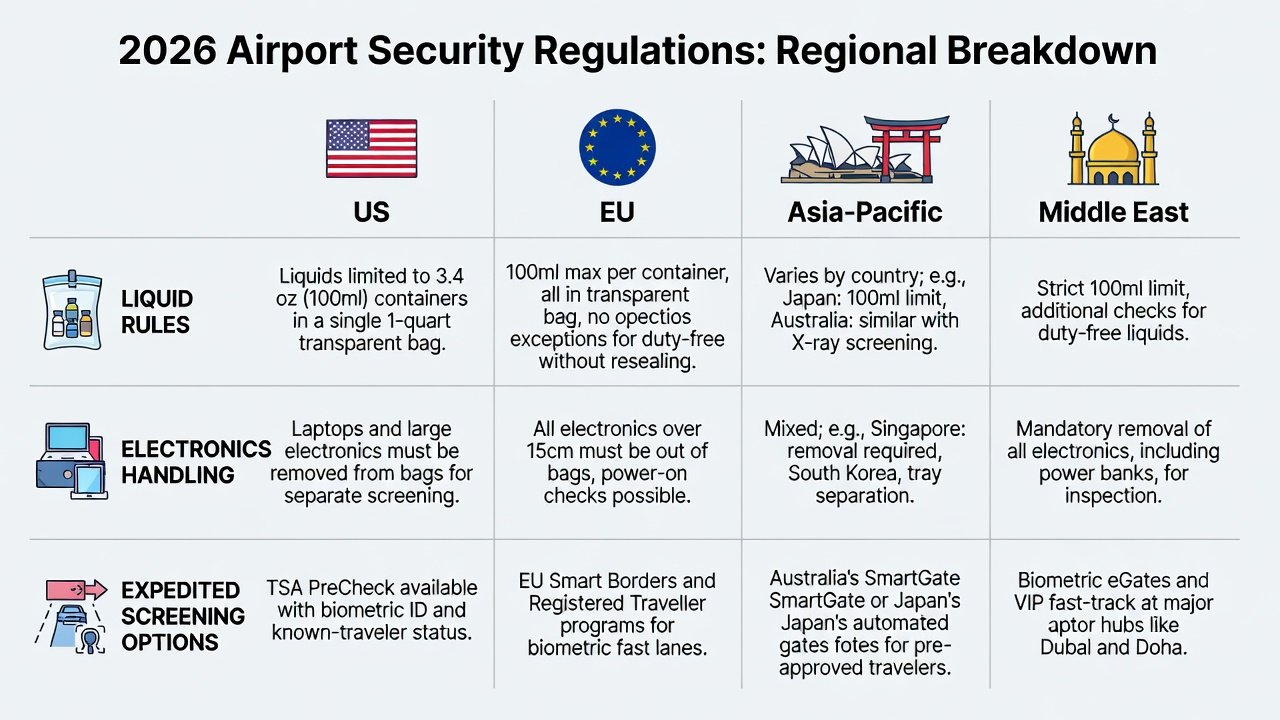
Side-by-Side Regional Comparison Table
| Region | Liquid Rules | Electronics | Expedited Option |
|---|---|---|---|
| US | 3-1-1 bag (100ml) | Remove laptops/tablets | TSA PreCheck |
| EU | 100ml per container | Usually remove larger devices | National trusted traveler programs |
| Asia-Pacific | Often remain in bag (CT scanners) | Stay in bag at many checkpoints | SmartGate / automated lanes |
| Middle East | 100ml standard | Flat in trays, minimal removal | Premium/family lanes |
Practical Packing Checklists and Time-Saving Strategies
Organize liquids first in every region using a dedicated clear pouch. Layer clothing items for easy removal of outer layers before reaching the scanner. Charge devices the night before to avoid delays from power bank inspections. Use packing cubes to separate electronics from clothing for quick access. Additional strategies include printing boarding passes in advance, wearing slip-on shoes, and keeping passports in an outer pocket. These small habits compound into significant time savings across multiple flights. For multi-region trips, create a master checklist that adapts the strictest rules from each area to ensure compliance everywhere.
Mistakes to Avoid and Expanded FAQ
Common pitfalls include forgetting to remove liquids from deeper pockets or mixing electronics with clothing. Always double-check your bag layout before entering the queue. FAQ: What if my liquid bag exceeds limits? Repack at the checkpoint using provided facilities. How do I handle multiple electronics? Place them together in one tray to speed scanning. Another frequent question covers connecting flights between regions: always adjust your packing between legs to match the strictest upcoming rules. A final tip is to review airport maps online the night before to locate the fastest security lanes. Additional FAQ items address power bank rules and medication handling, both of which benefit from advance preparation and clear labeling.
Conclusion
Mastering 2026 regional airport security differences empowers travelers to move efficiently. Apply these tailored checklists and strategies on your next trip to minimize stress and maximize time at your destination. Always verify the latest updates on official government sites before travel.

No comments yet. Be the first!