 PlaceBee
Why Layering is Essential for 2026 Travel
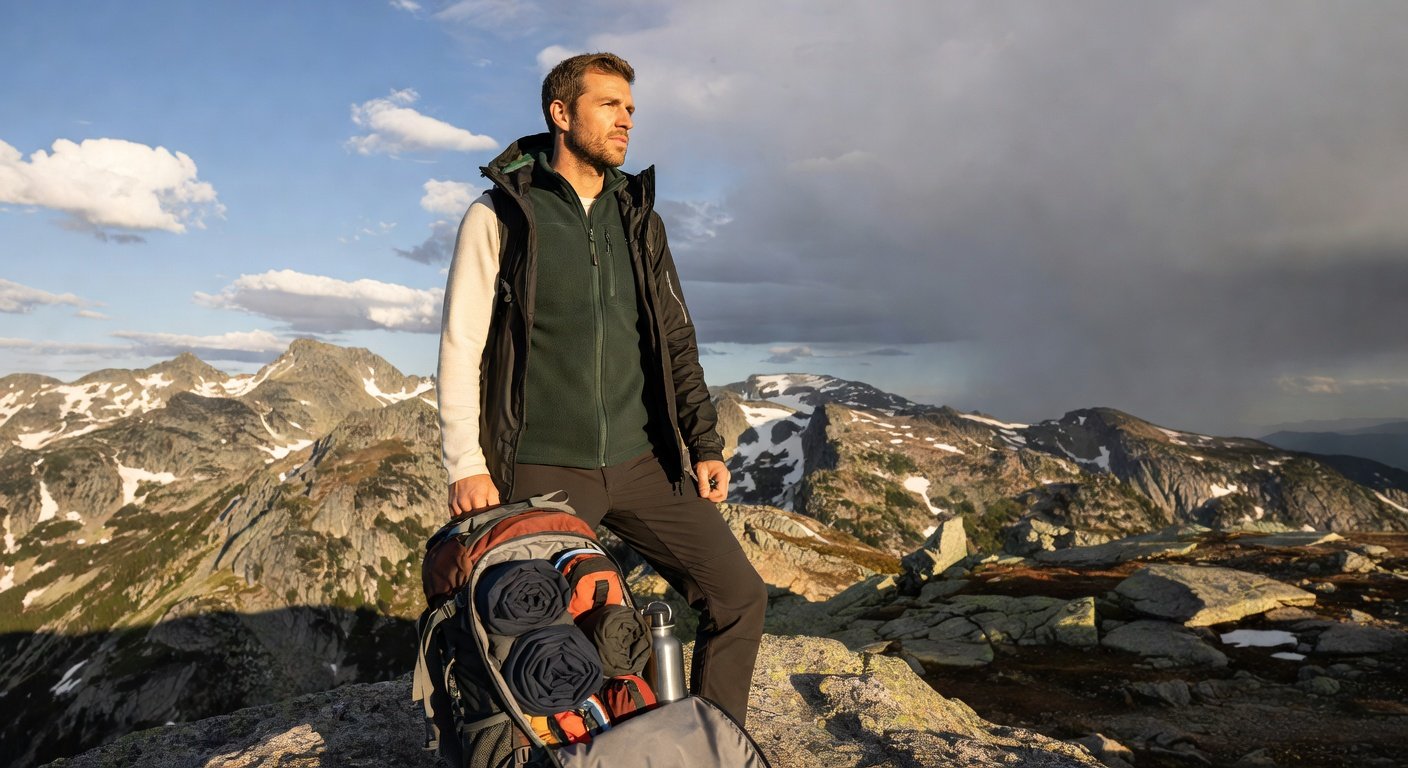
Travel weather in 2026 is set to be more unpredictable than ever, thanks to shifting climate patterns. Sudden rain in sunny destinations, heatwaves in cooler regions—packing for versatility is key. Advanced layering lets you adapt on the fly without lugging a massive suitcase. Focus on multi-use clothing that packs small, wicks moisture, and transitions seamlessly from hikes to dinners.
Pro travelers swear by merino wool, nylon blends, and technical synthetics for their breathability and quick-dry properties. These fabrics handle everything from 40°F mornings to 80°F afternoons.
Smart Fabric Choices for Multi-Climate Packing
Choose fabrics that punch above their weight:
- Merino Wool: Naturally odor-resistant, temperature-regulating, and lightweight. Ideal base layers.
- Nylon/Spandex Blends: Packable, stretchy, and water-repellent for outer layers.
- Synthetic Insulators: Like PrimaLoft or Polartec—compact fleeces that compress tiny.
- Pertex Shells: Ultralight windproof layers that pack into their own pocket.
Avoid cotton; it absorbs moisture and stays wet. For authoritative gear advice, check out REI's expert guides.
Layering Techniques: Build Like a Pro
The rule? Base + mid + shell, with each layer removable. Start with a moisture-wicking base (merino tee), add insulation (fleece vest), top with a hardshell jacket. Mix textures for style: pair a wool base with a quilted vest and packable parka.
- Assess daily forecasts via apps, but pack for a 20°F swing.
- Use vests for core warmth without bulk.
- Opt for zippered pieces for ventilation control.
Packing Hacks Beyond Cube Method
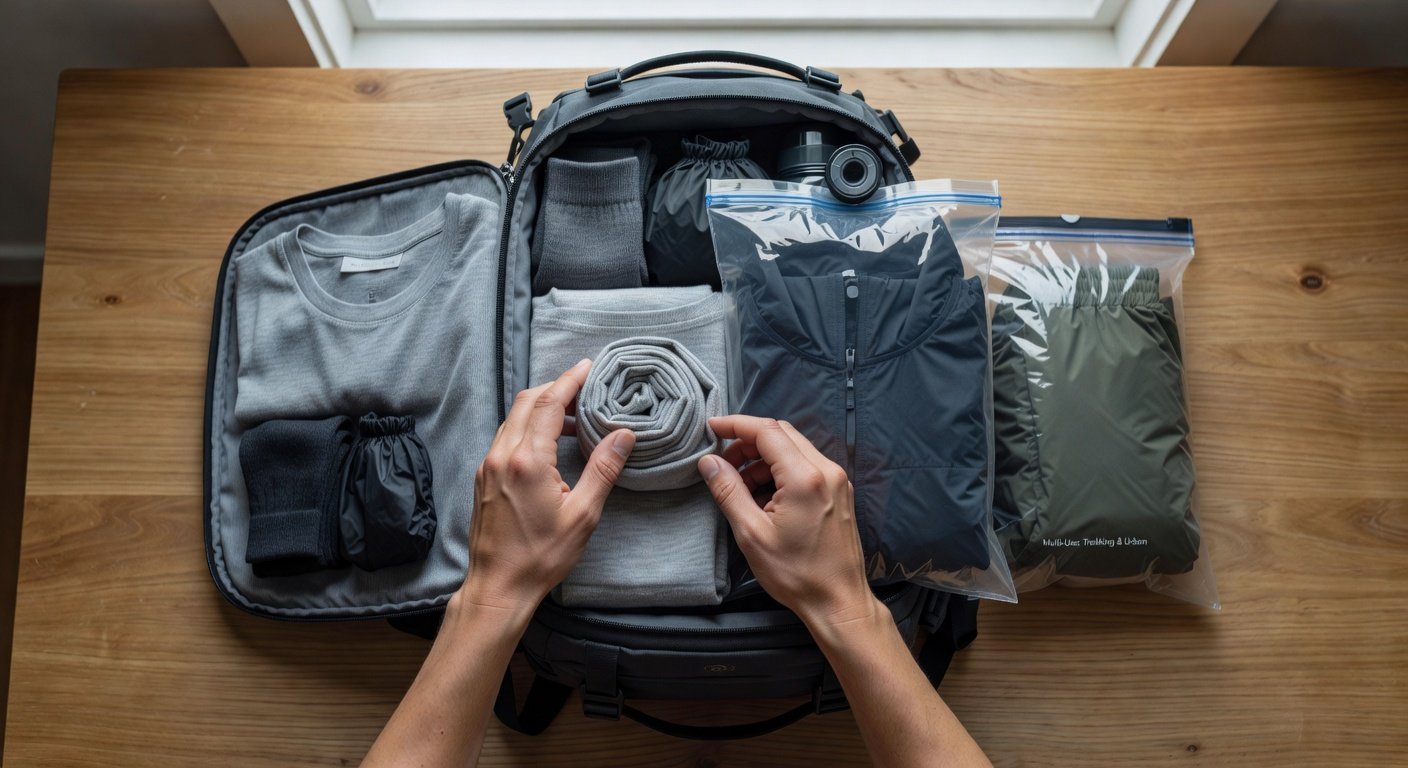
Ditch packing cubes for these space-saving tricks:
- Bundle Wrapping: Wrap layers around a core item (like pants) to minimize wrinkles and volume.
- Rolling with Compression: Roll clothes tightly, then use compression sacks for 50% more space.
- Stuff Sacks: Shove jackets into their pockets; use as pillows en route.
- Layer Folding: Fold largest items first, layer mediums inside, tuck smalls in crevices.
Pro tip: Weigh your bag digitally—aim under 10kg for carry-on freedom.
Building Your 7-Day Capsule Wardrobe
A capsule wardrobe means 10-12 pieces creating 20+ outfits. Neutral colors (black, navy, olive, gray) mix endlessly.
| Item | Purpose | Packs To |
|---|---|---|
| 2 Merino Tees | Base layers | Palm-sized |
| 1 Long-Sleeve Shirt | Mid-layer/sun protection | Fist-sized |
| 1 Fleece Vest | Insulation | Apple-sized |
| Packable Rain Jacket | Shell | Pocket-sized |
| 2 Pairs Convertible Pants | Legwear | Compact roll |
| Buff/Neck Gaiter | Versatile accessory | Tiny |
| Lightweight Down Puffer | Cold evenings | Stuff sack |
Add 3 underwear, 3 socks, 1 hat. Total weight: under 4kg.
Step-by-Step Packing Guide
- Day 1: Lay out all items. Check weather for your route.
- Day 2: Roll bases and undies. Bundle pants around tees.
- Day 3: Compress mid-layers into a 1L sack.
- Day 4: Stuff shells; attach to exterior straps.
- Day 5: Accessories in ziplocks. Test-pack bag.
- Day 6: Laundry plan: Use hostel sinks with Dr. Bronner's soap.
- Day 7: Final weigh-in. Adjust as needed.
Real Traveler Case Studies
Case 1: Sarah's Europe Hop – Hit Paris (rainy 50°F) then Barcelona (sunny 75°F). Her merino base + Pertex shell adapted perfectly. Packed in a 20L daypack.
Case 2: Mike's Asia Trek – Monsoon Vietnam to dry Thai islands. Convertible pants and roll-packing kept him at 7kg total.
Case 3: Lena's Patagonia Adventure – Windswept trails with 30°F drops. Bundle method saved space for camera gear.
Monitor forecasts with tools from The Weather Channel. For global insights, visit Lonely Planet.
Final Tips for Effortless Travel
Layering isn't just survival—it's style. Mix patterns subtly for flair. Wash mid-trip to extend wear. In 2026, travel light, adapt fast, and stay comfortable anywhere.

No comments yet. Be the first!