 PlaceBee
Introduction to the World's Premier Camping Destinations
Planning your next adventure requires understanding the best places to visit for camping in 2026. From rugged mountains to serene coastal areas, these must-see spots offer unique experiences tailored to various skill levels. This guide compares eight premier global destinations, covering terrains, peak seasons, difficulty, and landscapes while providing practical advice on booking, safety, gear, and sustainability. Whether you're a beginner seeking easy access or an experienced camper craving remote challenges, matching your travel style to the right location is essential. We'll explore real examples like top-rated campgrounds and seasonal strategies to help you plan effectively. Campers often find that choosing the right destination transforms a simple trip into an unforgettable journey filled with natural wonders and personal growth.
Exploring these locations allows you to immerse yourself in diverse ecosystems. Each site presents distinct opportunities for hiking, wildlife observation, and stargazing under clear skies. By examining factors such as accessibility and environmental impact, you can select spots that align perfectly with your goals. This comprehensive comparison ensures you avoid common pitfalls and maximize enjoyment during your 2026 travels.
Top 8 Camping Destinations for 2026
1. Yellowstone National Park, USA
Featuring geothermal wonders and vast forests, this destination suits intermediate campers. Peak season runs June to August with moderate difficulty due to wildlife awareness needs. Top-rated campgrounds include Madison and Canyon, where visitors enjoy proximity to geysers and hot springs. The terrain mixes open meadows with dense pine woods, creating opportunities for both relaxed evenings and challenging day hikes. Seasonal timing strategies recommend arriving early in summer to secure spots before peak crowds arrive, allowing for better wildlife viewing at dawn and dusk.
2. Banff National Park, Canada
Alpine meadows and turquoise lakes define this landscape. Ideal for advanced campers, best visited July to September. Campers can base at Tunnel Mountain or Lake Louise campgrounds, offering stunning views of the Canadian Rockies. Difficulty increases with elevation gains on trails like the Plain of Six Glaciers. The unique landscapes include glacial rivers and abundant wildlife such as elk and bears, making it a must-see spot for nature photographers. Practical examples show that shoulder season visits in September provide milder weather and fewer visitors while maintaining access to all facilities.
3. Torres del Paine, Chile
Dramatic Patagonia peaks offer high-difficulty trekking camping. Optimal from November to March. The Paine Grande and Torres campgrounds serve as popular bases for multi-day treks through granite spires and turquoise lagoons. Terrain features windy plateaus and rugged paths that test endurance. Seasonal strategies involve monitoring weather closely, as sudden changes can affect safety. This area stands out among best places to visit for its untouched wilderness feel and biodiversity including guanacos and condors.
4. Fiordland National Park, New Zealand
Lush rainforests and fjords provide moderate terrain. Peak season December to February. Milford Sound and Te Anau campgrounds offer excellent facilities amid dramatic fjords and waterfalls. Campers enjoy kayaking and short hikes with moderate difficulty suitable for families. The landscapes feature dense fern forests and mirror-like waters reflecting mountains. Timing your visit for early December helps avoid the heaviest rains while still experiencing vibrant summer flora.
5. Iceland's Highlands
Volcanic landscapes and hot springs attract experienced adventurers. Summer months June to August recommended. Key sites like Landmannalaugar provide natural geothermal bathing alongside black sand deserts and colorful rhyolite mountains. High difficulty arises from unmarked trails and river crossings. Examples of successful trips highlight the need for 4x4 vehicles and detailed route planning to navigate this remote must-see spot safely.
6. Grand Canyon National Park, USA
Iconic canyons with varying difficulty trails. Spring and fall are ideal to avoid crowds. Mather and Desert View campgrounds provide rim access with views of layered rock formations. Beginners can stick to easier rim walks while advanced campers tackle inner canyon routes. Seasonal timing favors March and October for comfortable temperatures and blooming wildflowers, enhancing the overall experience among top global camping locations.
7. Serengeti National Park, Tanzania
Savanna plains for wildlife viewing. Dry season June to October offers best conditions. Seronera and Lobo campgrounds allow close encounters with the Great Migration. Moderate to advanced difficulty due to open terrain and animal proximity. Unique landscapes include endless grasslands dotted with acacia trees. Practical advice includes joining guided safaris from camp to maximize sightings while respecting park rules.
8. Blue Mountains, Australia
Eucalyptus forests and cliffs for all levels. Peak visits March to May and September to November. Campgrounds like Katoomba and Blackheath offer easy access to lookouts and bushwalks. Terrain ranges from gentle valley floors to steep escarpments. This destination excels as one of the best places to visit for its proximity to Sydney and diverse birdlife, making it perfect for mixed-experience groups.
Decision Matrix for Matching Sites to Experience Levels
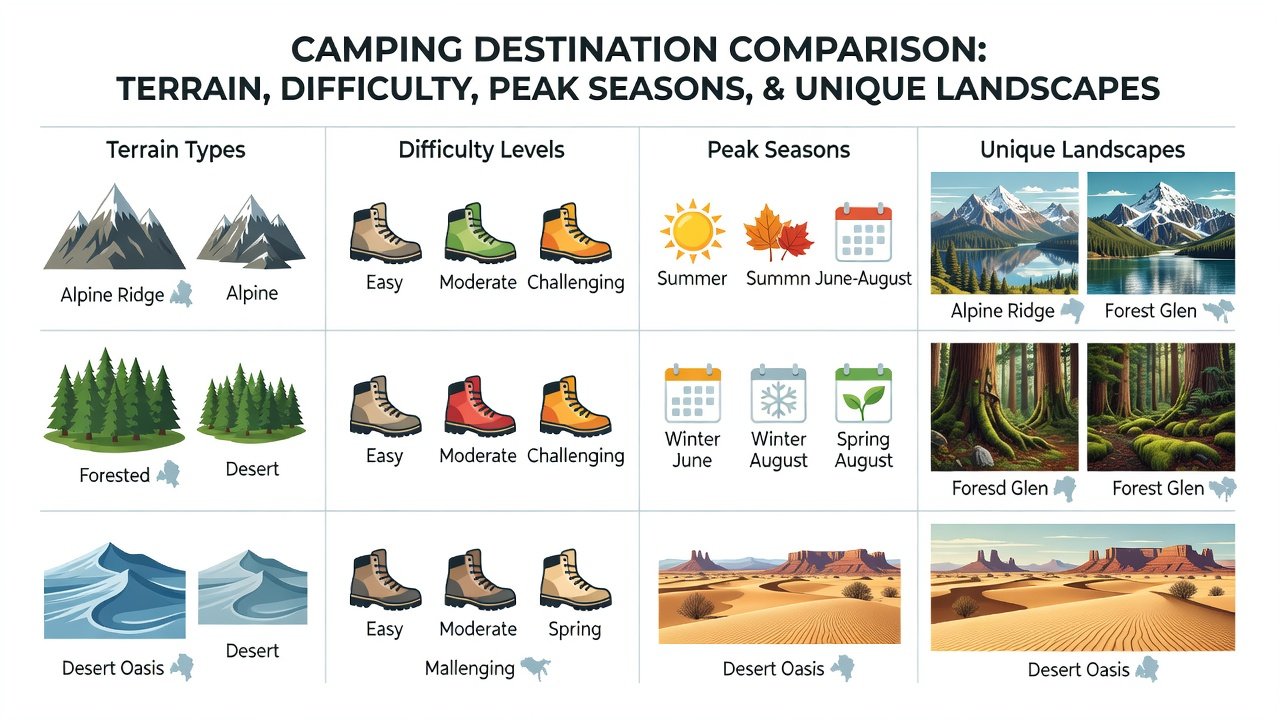
The decision matrix helps align destinations with your background and preferences. Beginners benefit from sites with established facilities and shorter trails such as Grand Canyon or Blue Mountains. Intermediate campers thrive at Yellowstone or Fiordland where moderate hikes lead to rewarding vistas. Advanced adventurers should target Torres del Paine or Iceland's Highlands for their demanding routes and isolation. Travel style considerations include wildlife focus at Serengeti, photography at Banff, and adventure trekking at Patagonia locations. Use this framework to evaluate factors like group size, physical fitness, and interest in cultural elements to refine your choice among these must-see spots.
Booking Tips and Seasonal Timing Strategies
Reserve sites 6-12 months ahead for popular spots like Yellowstone using official reservation systems. Step-by-step approaches involve checking availability calendars monthly and setting alerts for cancellations. Shoulder seasons often yield better rates and availability across all destinations. For international sites, factor in visa processing times and local permit requirements to avoid last-minute issues.
Safety Advice and Gear Recommendations
Always check weather forecasts and carry bear spray in relevant areas like Yellowstone and Banff. Essential gear includes a four-season tent, layered clothing, navigation tools, and water purification systems. Practical examples demonstrate packing multi-tools and first-aid kits tailored to specific terrains. Costs vary qualitatively from budget-friendly national park fees to premium guided experiences, emphasizing preparation over specific expenditures. Safety protocols differ by region, with extra emphasis on hydration in arid zones like the Grand Canyon.
Eco-Friendly Practices
Follow Leave No Trace principles by packing out all waste and minimizing campfire impacts. Support sustainable operators and minimize single-use plastics. Learn more from National Park Service guidelines, Parks Canada resources, and New Zealand Department of Conservation advice. Real-world applications include choosing low-impact campsites and participating in local conservation cleanups during your stay.
Practical Examples of Top-Rated Campgrounds and Additional Tips
Examples include Madison Campground in Yellowstone for families seeking amenities and Torres del Paine's central campsites for hikers wanting trailhead access. Additional considerations cover vehicle requirements for remote areas and group size limits at high-demand locations. These insights help create balanced itineraries that incorporate rest days and cultural excursions alongside core camping activities.
Conclusion
Selecting from these best places to visit ensures memorable camping adventures in 2026. Use the decision matrix to align choices with your skills and preferences for a safe, enjoyable trip that respects natural environments and creates lasting memories.
No comments yet. Be the first!