 PlaceBee
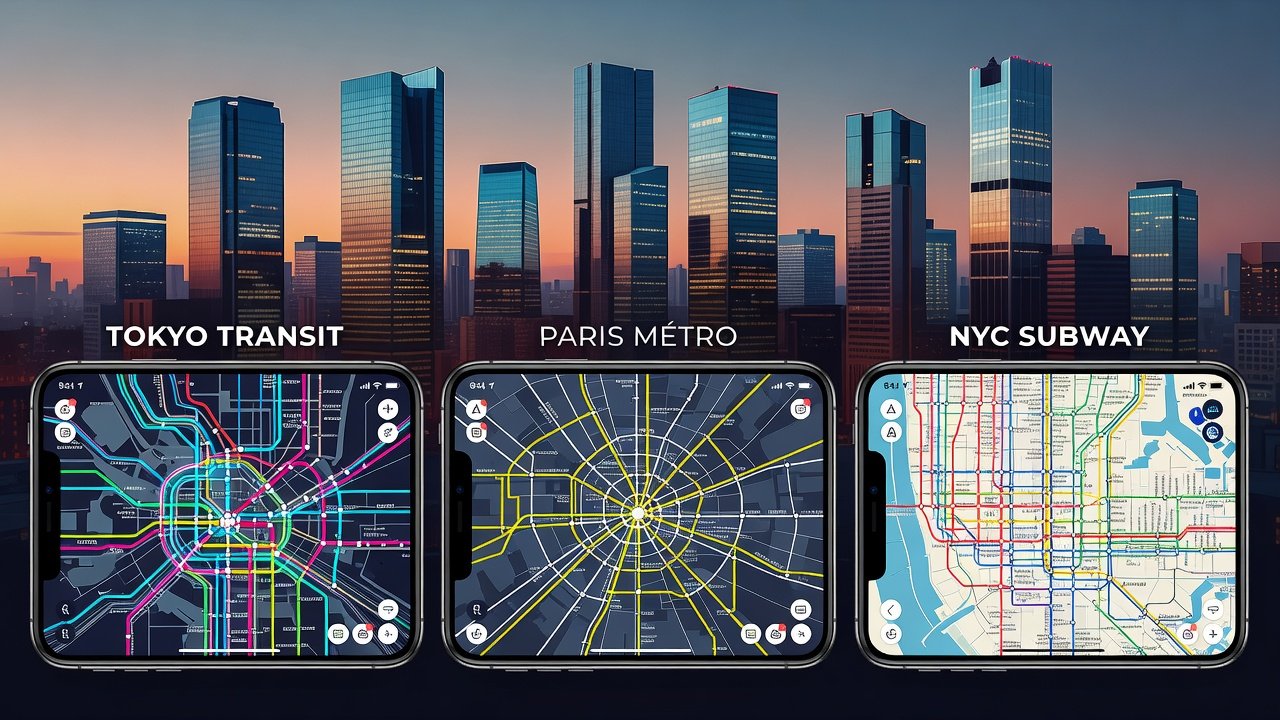
Introduction to 2026 Transit Apps
Navigating major cities like Tokyo, Paris, and New York requires more than basic maps. In 2026, advanced transit apps integrate real-time data, seamless payments, and crowd predictions to optimize journeys. This guide compares leading apps across these destinations, offering step-by-step setups, pro hacks, and real traveler insights for intermediate users who want to move beyond simple navigation. Whether commuting daily or exploring as a visitor, mastering these tools can save significant time and reduce stress in complex urban systems.
Tokyo Transit Apps: Real-Time Mastery and Local Integrations
Tokyo's dense rail network benefits from apps like Japan Transit and enhanced Google Maps with local APIs. Real-time features track delays on JR lines and subways instantly, providing minute-by-minute updates during peak hours. These apps pull data from multiple operators including JR East, Tokyo Metro, and Toei, creating a unified view of the entire network. Users can view live train positions, estimated arrival times, and even platform crowding levels derived from historical patterns and sensor data.
Step-by-Step Setup Guide for Tokyo Apps
- Download the primary app such as Japan Transit or Navitime and grant location permissions for accurate GPS tracking.
- Link your Suica or Pasmo IC card directly in the app for seamless contactless payments and balance top-ups via linked credit cards.
- Customize route preferences to prioritize fastest paths or those with fewer transfers, and set up push notifications for service disruptions on key lines like the Yamanote or Chuo.
- Enable offline mode to cache popular routes in advance, which proves essential in areas with spotty underground signals.
Pro hacks for avoiding crowds include checking built-in heatmaps that highlight stations like Shinjuku or Shibuya during rush hours between 7:30 and 9:00 AM. Shift departures by 15 to 20 minutes or opt for alternative exits shown in the app to bypass bottlenecks. One practical example involves rerouting from the Ginza line to the less crowded Hibiya line during evening commutes, often cutting wait times in half.
Paris Transit Apps: Integrated Payments and Network Coverage
Apps such as Citymapper and the official RATP tool excel in Paris with NFC ticketing and live metro updates across RER, metro, bus, and tram lines. Real-time features display exact arrival predictions and alert users to strikes or maintenance that frequently affect the network. Payment integrations allow buying tickets or passes directly through the app using Apple Pay or credit cards, eliminating the need for physical machines at stations.
Visit the official RATP site for the latest on app updates and service alerts. Step-by-step setup involves installing the app, selecting your language, and adding a virtual ticket wallet. Enable location services to receive personalized suggestions based on your starting point near landmarks like the Eiffel Tower or Notre-Dame.
Cost-Saving Strategies and Crowd Avoidance
Advanced users leverage weekly or monthly pass options loaded in-app for frequent travel between zones. Hacks include monitoring real-time occupancy data to skip crowded cars on Line 1 during tourist peaks. For instance, choosing a slightly longer but emptier route via the RER C instead of the metro can save time overall by avoiding transfers at busy hubs like Châtelet.
New York Transit Apps: MTA Innovations and OMNY Payments
OMNY and the MTA app lead in New York, offering real-time bus and subway tracking plus contactless payments across the five boroughs. The apps integrate data from the subway, buses, and even Staten Island Ferry, with features like service change notifications and elevator status for accessibility. Real-time alerts cover delays caused by signal issues or events, while payment integration supports tap-and-go with credit cards or mobile wallets at turnstiles.
Check MTA resources for current service status and app tutorials. Setup requires downloading the MTA app, creating an account for saved trips, and activating OMNY for fare payments. Customize alerts for specific lines such as the 4/5/6 or L train to receive disruption notices before boarding.
Advanced Hacks for New York Commuters
Crowd avoidance relies on predictive features that suggest alternate buses or express options during rush hour. An example is switching from the crowded 7 train to the E/F lines when the app shows high density at Times Square. Users also benefit from integrating apps with fitness trackers to log walking segments between stations for more accurate total travel estimates.
Side-by-Side Feature Comparison
| Feature | Tokyo Apps | Paris Apps | New York Apps |
|---|---|---|---|
| Real-Time Alerts | Excellent with multi-operator coverage | Strong on strikes and delays | Robust for subway and bus |
| Payment Integration | Suica/Pasmo IC cards | NFC tickets and passes | OMNY contactless |
| Crowd Prediction | Advanced heatmaps and sensors | Moderate occupancy data | Basic density indicators |
| Offline Support | Strong route caching | Good for maps and schedules | Limited but improving |

Traveler Case Studies Showing Time Saved
A business traveler in Tokyo used Japan Transit heatmaps to avoid a 30-minute delay at Tokyo Station, arriving 22 minutes earlier at a meeting by taking an earlier express on the Keihin-Tohoku line. In Paris, a family of four saved over 45 minutes on a day trip by using Citymapper to bypass a RER strike, opting for a bus route with live tracking that avoided the affected central stations. In New York, a daily commuter reported cutting 18 minutes off their morning routine by following MTA app suggestions to board an earlier local train before a reported signal problem on the express track. Another case involved a tourist who used offline cached routes in Tokyo to navigate during a brief network outage, preventing a 50-minute detour. These examples highlight how combining real-time data with payment features leads to measurable efficiency gains across all three cities.
Common Mistakes to Avoid When Using Transit Apps
- Ignoring offline caching, which leaves users stranded without data in tunnels or during outages.
- Failing to update payment methods, resulting in declined fares at peak times when balances run low.
- Over-relying on default routes without checking crowd predictions, leading to unnecessary congestion.
- Not customizing notifications, causing missed alerts about planned service changes.
FAQs on Offline Functionality and Accessibility Options
- Do apps work offline? Most cache major routes and schedules after an initial sync, but real-time updates require connectivity; always preload data before travel.
- What accessibility options exist? All top apps include voice-guided navigation, wheelchair-accessible route filters, and elevator outage alerts for stations in Tokyo, Paris, and New York.
- Can apps handle multi-city trips? Cross-platform tools like Citymapper allow planning journeys that span regions, though local apps often provide deeper integration.
- How accurate are crowd predictions? Accuracy reaches 85-90 percent during regular hours based on historical data, though events can reduce reliability.
- Are there language barriers for non-English speakers? Apps support multiple languages including French, Japanese, and Spanish with full menu translations.
Tokyo Metro official info provides further details on accessibility features and app compatibility. Additional guidance appears on global mapping services that enhance these local tools.
Conclusion
Mastering these 2026 transit apps transforms travel in Tokyo, Paris, and New York. Apply the setups, hacks, and case study lessons for efficient, cost-effective journeys that reduce both time and frustration on every trip.

No comments yet. Be the first!