 PlaceBee
Understanding Jet Lag and Why It Matters for Long-Haul Travel
Jet lag disrupts your body's internal clock, or circadian rhythm, when crossing multiple time zones on long-haul flights. Symptoms like fatigue, insomnia, digestive issues, and impaired focus can linger for days, ruining your 2026 vacation or business trip. For trips spanning 6+ hours, such as New York to Tokyo or London to Sydney, advanced strategies are essential. This guide draws from sleep science, pilot insights, and frequent flyer hacks to help you arrive refreshed.
Research from the Sleep Foundation shows eastward travel (advancing your clock) is tougher than westward. But with proactive planning, you can minimize disruption by 50-70%.
Advanced Technique 1: Timed Light Exposure
Light is the strongest cue for your circadian rhythm. Use it strategically pre- and post-flight.
- Pre-flight: Shift your schedule gradually. For eastward travel, seek bright light in the morning and dim evenings 3-5 days before departure.
- In-flight: On westward flights, expose yourself to cabin light during 'daytime' at destination. Wear blue-light blocking glasses at night.
- Post-flight: Get 30-60 minutes of natural sunlight upon arrival, ideally within 1-2 hours of local sunrise.
Apps like Timeshifter use algorithms based on NASA research to personalize light schedules—more on apps later.
Advanced Technique 2: Melatonin Protocols
Melatonin, a hormone regulating sleep, is a game-changer when timed right. The CDC recommends consulting a doctor, but here's a proven protocol:
- Dosage: 0.5-5mg, starting low to avoid grogginess.
- Eastward (phase advance): Take 5 hours before bedtime at destination, starting 2-3 days pre-flight.
- Westward (phase delay): Take post-arrival at local bedtime.
- Avoid: Combining with alcohol or sedatives.
Studies show 3mg timed correctly reduces jet lag symptoms by up to 50%. Source exogenous melatonin from supplements; natural boosts come from cherries or kiwis.
Advanced Technique 3: Strategic Napping
Naps reset your rhythm without deep sleep inertia.
- Pre-flight: 20-30 minute power naps in the afternoon.
- In-flight: Nap aligned with destination night; use eye mask and neck pillow.
- Post-flight: Limit to 20 minutes before 2 PM local time.
Pilots swear by the "aviation nap": 26 minutes for optimal alertness.
App-Based Trackers vs. Natural Remedies: Which Wins?
Tech versus nature? Both have merits; choose based on your style.
App-Based Trackers
Apps like Entrain, Jet Lag Rooster, or Timeshifter analyze your flight, age, and chronotype for personalized plans. They send push notifications for light, melatonin, caffeine, and naps.
- Pros: Science-backed (e.g., Timeshifter licensed by NASA), easy integration with wearables like Oura Ring or Whoop for sleep tracking.
- Cons: Subscription fees ($10/trip), less flexible for irregular schedules.
Natural Remedies
Go analog with herbal teas (chamomile, valerian), hydration (electrolyte packets), and grounding exercises.
- Pros: Free, no screens, holistic (e.g., adaptogens like ashwagandha).
- Cons: Less precise; efficacy varies.
Verdict: Use apps for data-driven precision on complex trips; natural remedies for short hauls or minimalism. Frequent flyers combine both—track with Apple Watch, remedy with tart cherry juice.
Pro Advice from Pilots and Frequent Flyers
Pilots endure chronic jet lag; their hacks are gold.
"Exercise upon landing—30 minutes of yoga or walking syncs your body faster than any pill." – Captain Sarah Jenkins, 20+ years with Delta.
- Pilot tip: Dehydrate-proof: Drink 8oz water/hour in-flight; use compression socks.
- Frequent flyer hack: Pre-load destination podcasts/TV to stay mentally in-zone.
- Bonus: Caffeine naps—consume coffee, nap 20 minutes as it kicks in for double alertness.
A Mayo Clinic study backs exercise for faster adaptation.
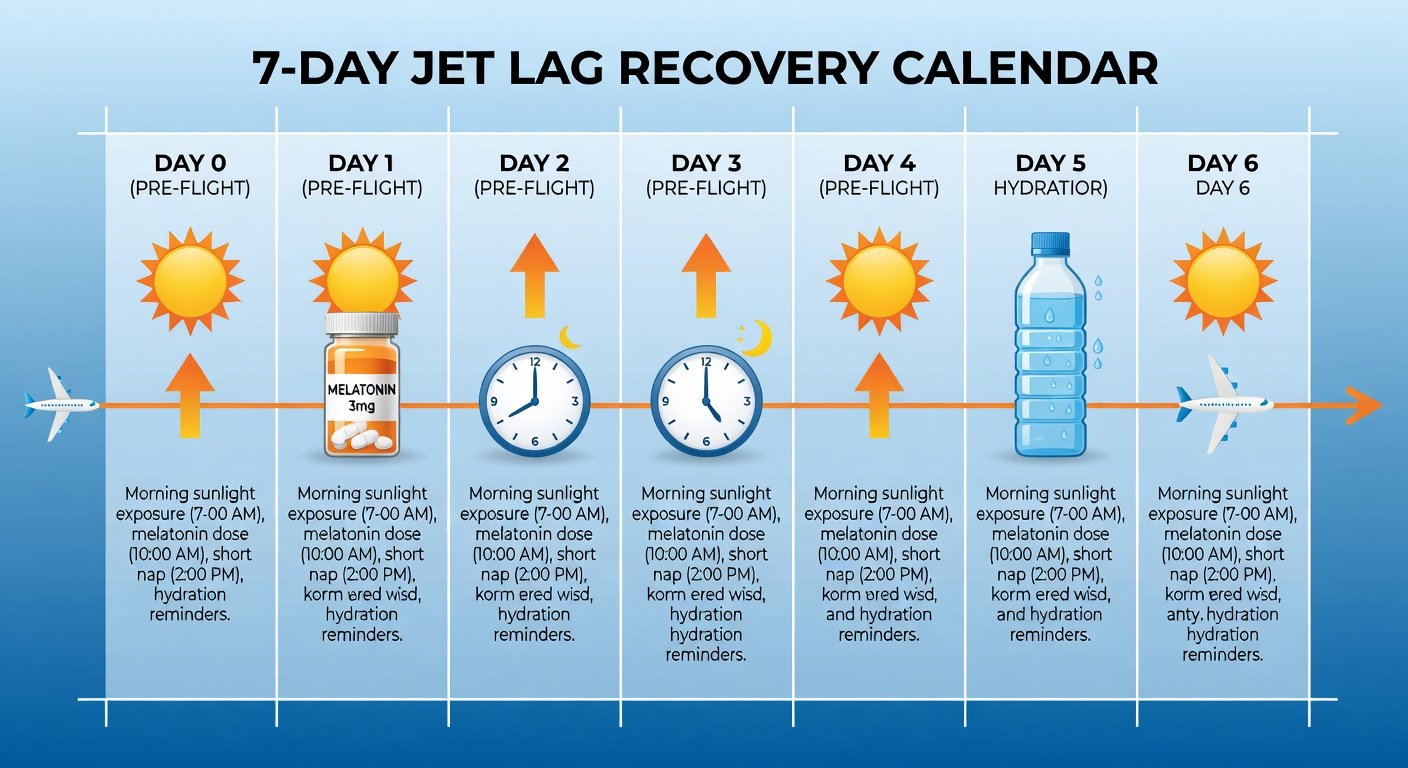
Customizable 7-Day Pre-Flight Plan
Adapt this for your time shift (e.g., +8 hours Tokyo from NYC).
| Day | Light | Melatonin | Nap/Caffeine | Other |
|---|---|---|---|---|
| -7 to -4 | Morning bright light | Evening (phase advance) | 20-min afternoon nap | Shift meals 1hr/day |
| -3 to -1 | Avoid evening light | Per app/schedule | No naps post-2PM | Pack remedies |
| Day 0 (Flight) | Cabin light as per dest day | At dest bedtime | Strategic nap | Move watch forward |
Customizable 7-Day Post-Flight Plan
Focus on anchoring to local time.
| Day | Light/Exercise | Sleep Hygiene | Diet |
|---|---|---|---|
| Day 1 | Sunrise walk | Bed at local 10PM | Light meals, no heavy dinner |
| Day 2-3 | Morning light + workout | Melatonin if needed | Hydrate + electrolytes |
| Day 4-7 | Consistent routine | Track with app | Anti-inflammatory foods |
Tweak for westward: Delay light/melatonin. Track progress with a journal or wearable.
Final Thoughts: Arrive at Peak Performance
Conquering jet lag for 2026 long-hauls means preparation, not reaction. Combine light, melatonin, naps, and pro tips for seamless transitions. Whether apps or remedies, consistency wins. Safe travels—your adventure awaits without the fog.
Complement these plans with our detailed trip itineraries for your destination.


No comments yet. Be the first!