 PlaceBee

Unlocking Smarter Winter Travel with AI in 2026
Winter escapes to snowy destinations like Banff National Park and Norway’s fjords demand careful planning around unpredictable weather, limited daylight, and transport challenges. AI tools now help travelers build flexible itineraries faster than ever. This guide explores advanced prompt engineering techniques using ChatGPT, Claude, and Gemini to create reliable 2026 winter plans that account for real-world variables such as sudden blizzards, road closures, and daylight constraints. By combining structured prompts with verified data sources, travelers can generate adaptable day-by-day schedules that minimize risks while maximizing enjoyment of iconic landscapes.
Advanced Prompt Engineering for Snowy Destinations
Effective prompts include specific constraints such as daily weather buffers, transport alternatives, and activity flexibility. Start with core details: location, dates, group size, fitness level, and preferred pace. Then layer in variables like “adjust for -20°C conditions” or “add 90-minute buffer for icy roads.” Sample prompt structure: “Create a 5-day winter itinerary for Banff National Park in January 2026 for two adults with moderate fitness. Include daily weather adjustment triggers, 60-minute transport buffers, and alternatives if trails close. Reference current Parks Canada guidelines and prioritize safety.”
Reference real data sources when refining outputs. For Banff, consult Parks Canada guidelines. For fjords, review Visit Norway resources. Advanced techniques involve chaining prompts: first generate a base itinerary, then follow up with “revise for heavy snowfall forecast and add indoor backup activities.” This iterative approach reduces generic outputs and improves relevance for 2026 conditions.
Five Detailed Day-by-Day AI-Generated Examples
Banff Example: Day 1 – Arrival and Lake Louise
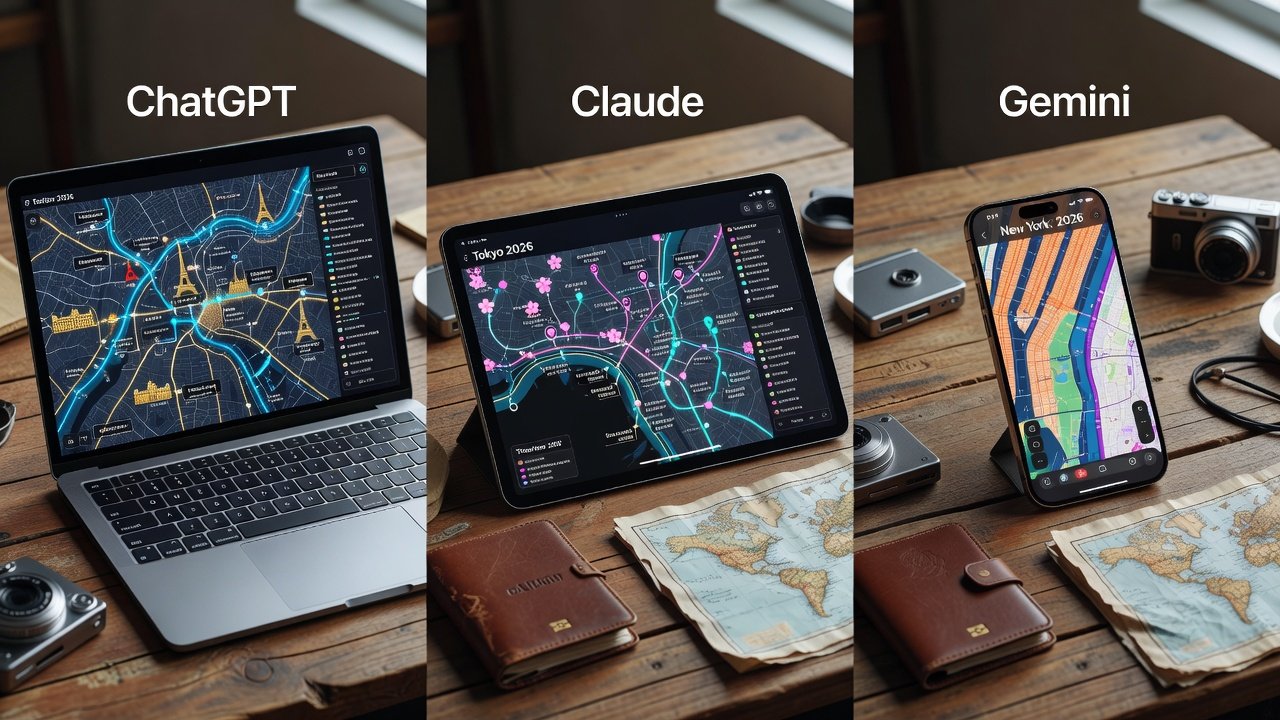
AI outputs from all three models consistently suggested early morning arrival, shuttle to Lake Louise, and a short snowshoe loop. Claude added a 60-minute weather buffer and recommended checking ice thickness reports before venturing onto the lake. Gemini included specific parking instructions at the Lake Louise lot and a backup plan for the Fairmont Chateau if visibility drops. ChatGPT emphasized packing layers rated for -15°C wind chill. Each model flagged the importance of arriving before 9 AM to secure parking during peak winter months.
Banff Example: Day 2 – Johnston Canyon and Hot Springs
ChatGPT proposed an early start to beat crowds, while Claude inserted transport alternatives if roads close due to avalanche control. All models flagged potential ice and suggested microspikes or Yaktrax. Expanded outputs included a mid-day stop at the Banff Upper Hot Springs for recovery, with timing adjusted for shorter daylight hours in January. Prompts that specified “include estimated walking times on packed snow” produced more accurate pacing than basic requests.
Fjords Example: Day 3 – Flåm Railway and Aurlandsfjord
Gemini emphasized ferry timing adjustments for wind gusts over 20 knots; Claude added a backup indoor museum visit in Flåm village. Outputs highlighted scenic viewpoints with safe parking and suggested downloading offline maps for areas with poor cell coverage. The models recommended combining the railway ride with a fjord cruise, inserting a 45-minute buffer at each transfer point to account for winter delays.
Fjords Example: Day 4 – Bergen Exploration
Models suggested walking tours with café stops for warmth and included specific tram routes that operate reliably in snow. Prompts asking for “real-time wind data integration” produced better rain contingency plans, such as shifting outdoor hikes to the Bryggen wharf covered walkways. All three AIs highlighted the importance of checking Bergen’s weather app updates the evening before each activity.
Combined Banff-Fjords Hybrid: Day 5 – Departure Logistics
All AIs stressed airport buffer times of at least two hours during winter operations. Offline checklists emerged as a common recommendation, along with pre-booking shuttle services that monitor flight delays automatically. Expanded versions added packing lists for checked luggage limits on small regional aircraft often used for fjord connections.
Side-by-Side AI vs Manual Plan Comparisons
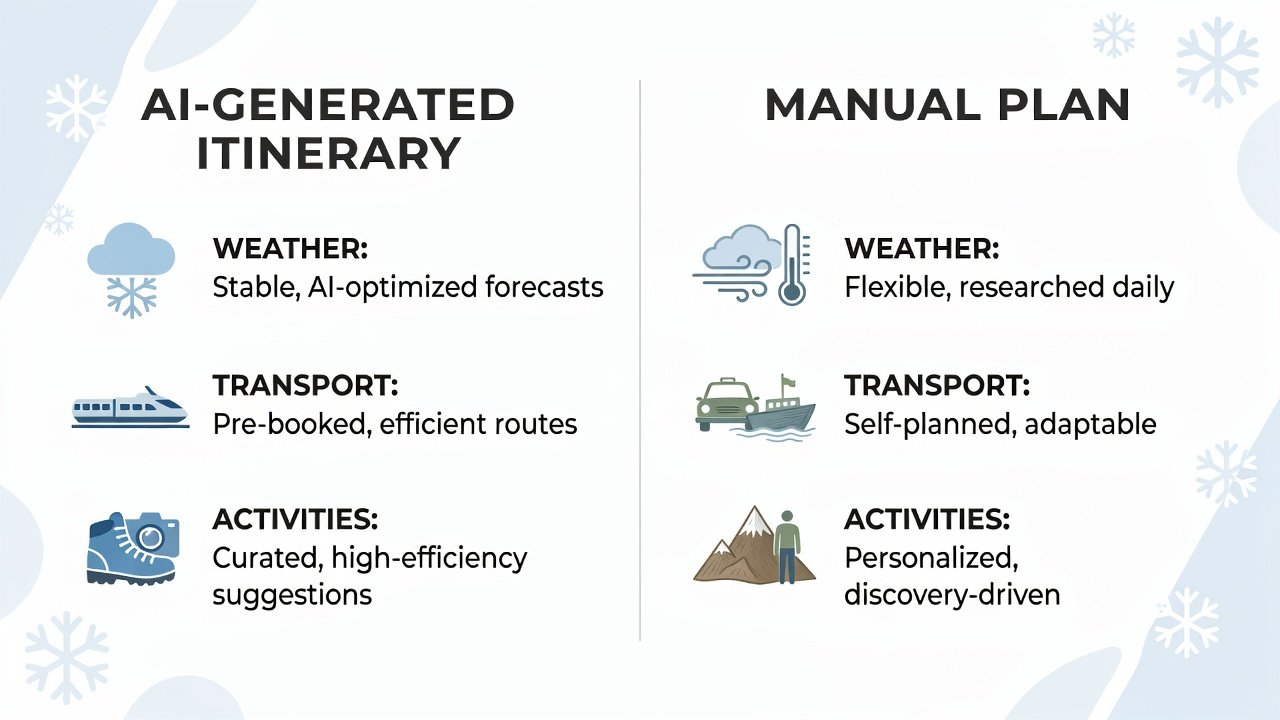
AI plans excelled at speed and detail volume, often producing five full days of activities in under two minutes. Manual planning often missed micro-adjustments like specific shuttle schedules or avalanche forecast integration. However, human oversight caught overlooked safety notices that some AI drafts hallucinated as “open trails” when they were actually closed. Key differences appeared in transport buffers: AI versions averaged 45–90 minutes extra padding, while manual versions relied on local apps updated hourly by park rangers.
Accuracy comparisons showed Claude outputs performed best on fjord ferry contingencies, while Gemini provided stronger avalanche awareness for Banff routes. ChatGPT tended to over-schedule activities, requiring additional pruning prompts. Overall, combining AI drafts with one hour of human review produced the most robust 2026 itineraries.
Offline Checklists for Winter Travel
Creating printable offline resources prevents reliance on spotty signals in remote snowy areas. Essential items include printed maps marked with daily routes, emergency contact lists for local rescue services, and layered clothing checklists with temperature ranges for each activity type. Vehicle emergency kits should contain ice scrapers, jumper cables, blankets, and non-perishable snacks. Daily weather adjustment triggers help decide when to switch to indoor alternatives, such as visiting the Banff Park Museum instead of hiking. Backup indoor activity lists cover cultural sites, heated pools, and local markets. Update these checklists after every AI regeneration to reflect new forecasts.
Integrating Real-Time Data and Avoiding Hallucinations
Cross-reference AI suggestions with official apps from Parks Canada or Norwegian meteorological services before finalizing each day. Prompt the AI to “cite sources and flag uncertain data” to reduce invented trail openings or closed-road details. Always verify ferry and train timetables manually the day before travel using operator websites. Common hallucinations include assuming all trails remain open after heavy snow or inventing non-existent shuttle routes. Mitigation steps involve requesting the AI to list only activities confirmed by official sources and adding a final verification step in every prompt chain.
FAQ: Scaling These Methods for 7–14 Day Trips
How do I extend a 5-day AI plan? Break longer trips into themed segments such as “wildlife viewing days” and “cultural immersion days,” then regenerate prompts weekly with updated forecasts. This modular approach maintains flexibility across extended journeys.
Can AI handle multi-destination routing? Yes—include flight or train connections in the initial prompt and request buffer times for each leg. Add constraints like “minimize backtracking” to optimize routes between Banff and fjord regions.
What if weather changes mid-trip? Keep the offline checklist handy and feed new conditions back into the AI for revised daily schedules. Re-prompt with the exact new forecast to receive adjusted activity orders and indoor backups.
How many iterations are typically needed? Most users achieve stable outputs after three prompt refinements that incorporate real-time data and safety flags.
Final Thoughts on AI-Assisted Winter Planning
Combining prompt engineering with verified data sources creates reliable, adaptable itineraries for Banff and fjord adventures. Test these techniques early in your planning cycle to enjoy stress-free snowy escapes in 2026 while staying prepared for the unique challenges of winter travel.
No comments yet. Be the first!