 PlaceBee
Introduction to Premier Kayaking Destinations in 2026
Adventure travelers planning 2026 trips will discover world-class kayaking opportunities in remote and iconic locations. This in-depth comparison highlights eight premier global destinations, examining seasonal water conditions that affect paddling feasibility, diverse wildlife encounters ranging from marine mammals to avian species, required skill levels from beginner to expert, and standout routes that showcase each area's unique features. Practical elements such as operator recommendations, safety protocols, comprehensive gear checklists, and a decision matrix help match destinations to individual budgets and experience levels. Additional guidance covers booking timelines to secure spots, strategies for avoiding peak crowds, and sustainability practices to minimize environmental impact. This guide goes beyond surface-level lists to provide concrete examples and actionable advice tailored for serious adventure seekers researching detailed comparisons.
1. Glacier Bay, Alaska, USA
Glacier Bay National Park offers tidewater glaciers and icy fjords with water conditions varying by season. June through August brings the most stable paddling with reduced wind and ice floes, though temperatures require dry suits. Wildlife includes frequent humpback whale sightings, harbor seals on icebergs, and bald eagles overhead. Skill level ranges from intermediate to advanced due to cold water and potential glacier calving waves. A standout route is the multi-day 25-mile paddle from Bartlett Cove to Muir Inlet, passing active glaciers. Recommended operators include Alaska Kayak Guides and Outpost Wilderness for guided excursions with safety briefings. Beginners should opt for shorter day trips near the visitor center before progressing to overnight routes.
2. Milford Sound, New Zealand
Milford Sound's steep fjords and waterfalls create dramatic scenery best experienced October through April when rainfall supports lush vegetation without extreme storms. Calm morning waters suit beginners, while afternoon winds challenge intermediates. Expect New Zealand fur seals basking on rocks and rare Fiordland crested penguins. Skill level starts at beginner for guided tours but advances for independent paddlers navigating tidal currents. The premier 18-mile route circumnavigates the sound's inner reaches, allowing stops at hidden coves. Operators such as Rosco's Milford Kayaks and Kayak Milford provide equipment and instruction. Practical example: Pair with a short hike to Key Summit for combined adventure value.
3. Sea of Cortez, Mexico
The Sea of Cortez maintains warm waters year-round, with November to April offering the driest conditions and clearest visibility for spotting marine life. Beginners thrive here due to minimal currents and sandy launch points. Wildlife highlights include breaching whale sharks in winter, playful sea lions, and frigatebirds diving overhead. Skill level accommodates all abilities, though advanced paddlers explore open-water crossings. A top route is the 30-mile Espíritu Santo Island loop over three days, camping on remote beaches. Local operators like Baja Outdoor Activities and Sea Kayak Baja provide support with bilingual guides. Example itinerary includes combining paddling with snorkeling sessions at protected coves.
4. Norwegian Fjords, Norway
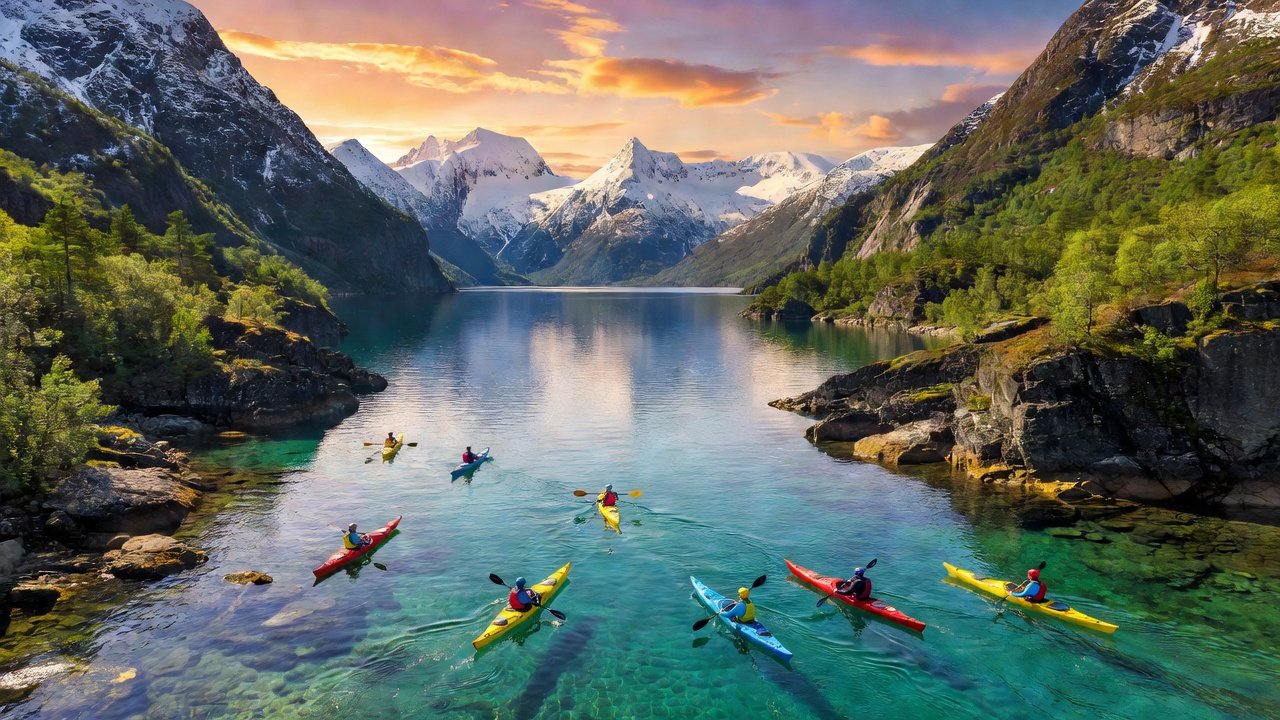
Norway's fjords feature long summer daylight from June to August, with cool but manageable water temperatures aided by the Gulf Stream. Intermediate paddlers handle the mix of sheltered arms and exposed sections. Wildlife encounters feature orcas hunting herring schools and white-tailed eagles soaring above cliffs. Standout route: a 40-mile expedition along Sognefjord, Norway's longest, with overnight stops at traditional villages. Operators such as Fjord Travel Norway and Norwegian Coastal Kayak offer multi-day packages including gear transport. Practical tip: Plan for frequent rain and carry waterproof maps for navigation in low visibility.
5. Amazon River, Brazil
The Amazon's blackwater rivers provide jungle immersion during the July to November dry season when water levels drop and currents ease for safer travel. Advanced skill is essential due to remote logistics and wildlife hazards like caimans. Encounters include pink river dolphins surfacing nearby and howler monkeys calling from canopy. A signature 55-mile route through the Anavilhanas archipelago allows exploration of flooded forests. Recommended operators include Amazon River Tours and Paddle Brazil for expedition-style support with satellite communication. Example: Integrate birdwatching stops to identify over 100 species along the way.
6. Great Barrier Reef, Australia
Australia's reef system offers protected lagoons ideal May through October when trade winds stabilize and water clarity peaks. All skill levels find suitable options, with beginners staying inside reef breaks. Marine life abounds with green sea turtles, reef sharks, and colorful parrotfish. The standout route covers the 22-mile Whitsunday Islands passage, linking multiple coral sites. Operators like Queensland Kayak Adventures and Reef Kayaking provide eco-certified tours. Practical detail: Many trips include optional snorkel extensions to view coral gardens up close.
7. Scottish Highlands, Scotland
Scottish lochs deliver misty, atmospheric paddling from May to September amid mild temperatures and long evenings. Intermediate skills manage occasional chop from passing ferries. Wildlife includes Eurasian otters fishing at dawn and golden eagles nesting on hillsides. Key route: the 28-mile Loch Ness and surrounding lochs circuit with castle views. Operators such as Highland Kayak Tours and Wilderness Scotland supply dry suits and route planning. Example: Combine with whisky distillery visits for cultural depth after paddling days.
8. Patagonia, Chile
Patagonia's glacial lakes and mountains shine December through March with longer days and calmer winds. Advanced paddlers navigate strong outflows from glaciers. Wildlife features Andean condors and guanacos on shores. The premier 35-mile Grey Lake to Pehoé circuit in Torres del Paine offers iconic granite peaks. Operators like Patagonia Adventure Expeditions and Kayak Patagonia handle logistics in remote areas. Practical advice: Acclimatize to wind by starting with sheltered bays before open crossings.
Decision Matrix for Choosing Your Destination
Match your profile using these criteria. Budget-conscious travelers with limited experience select Sea of Cortez or Scottish Highlands for lower costs and easier access. Those prioritizing wildlife select Glacier Bay or Amazon River where encounters are frequent and varied. Advanced paddlers seeking challenge choose Patagonia or Norwegian Fjords for technical routes and isolation. Family groups or beginners favor Milford Sound and Great Barrier Reef due to supportive operators and mild conditions. Cross-reference with seasonal availability and permit requirements to finalize.
Comprehensive Gear Checklist
Prepare with a coast guard-approved personal flotation device, adjustable paddle with spare, dry bags for electronics, bilge pump, whistle, and first-aid kit including hypothermia treatment supplies. Layer with moisture-wicking base, insulating mid-layer, and waterproof shell. Destination-specific additions include sun protection for tropical sites and neoprene gloves for cold waters. Test all equipment in controlled settings before departure.
Safety Protocols and Operator Recommendations
Verify operators hold current certifications and insurance. Conduct pre-launch weather checks and file float plans. Carry VHF radios or satellite messengers in remote areas. National Park Service resources detail park-specific rules, while NOAA provides marine forecasts. Always paddle in groups and maintain visual contact.
Booking Timelines, Crowd Avoidance, and Sustainability
Reserve 6-9 months ahead for popular summer slots. Shoulder seasons like September or April reduce crowds while retaining decent conditions. Practice sustainability by selecting low-impact operators, packing out all waste, and supporting local conservation funds. Avoid sensitive wildlife zones during breeding periods.
Frequently Asked Questions
Are permits required? Yes, many parks mandate advance reservations; apply via official portals months early. How do weather risks factor in? Sudden changes occur, so flexible schedules and monitoring apps are essential. Can kayaking combine with hiking or snorkeling? Most destinations offer integrated packages allowing seamless activity switches within a single trip.
Conclusion
Thorough research into these eight kayaking havens equips travelers to select experiences aligned with skill, interests, and timing. Detailed preparation transforms a 2026 adventure into a safe, enriching journey that respects natural environments.
No comments yet. Be the first!