 PlaceBee
Introduction: Capturing 2026's Most Photogenic Destinations
Visual wanderlust continues to inspire photographers seeking fresh horizons where dramatic landscapes intersect with rich cultures and diverse wildlife. In 2026, a new wave of emerging destinations across multiple continents promises exceptional visual opportunities for those prepared with the right strategies. This comprehensive guide moves beyond basic destination lists to provide actionable shooting techniques, detailed gear advice, precise seasonal timing, advanced composition methods, and real-world examples that demonstrate tangible improvements in image quality. Readers will also find practical packing checklists, ethical photography frameworks, and answers to common questions about permits and post-processing workflows. By following these steps, you can transform ordinary travel snapshots into professional-grade imagery that captures the essence of each location while respecting local environments and communities. Planning ahead with these insights ensures your 2026 trips deliver both memorable experiences and portfolio-worthy results.
8 Emerging 2026 Photography Hotspots with Shooting Strategies
These carefully selected locations combine natural drama, cultural authenticity, and wildlife encounters to maximize photographic potential. Each offers unique challenges and rewards for prepared travelers.
1. Patagonian Ice Fields, Chile
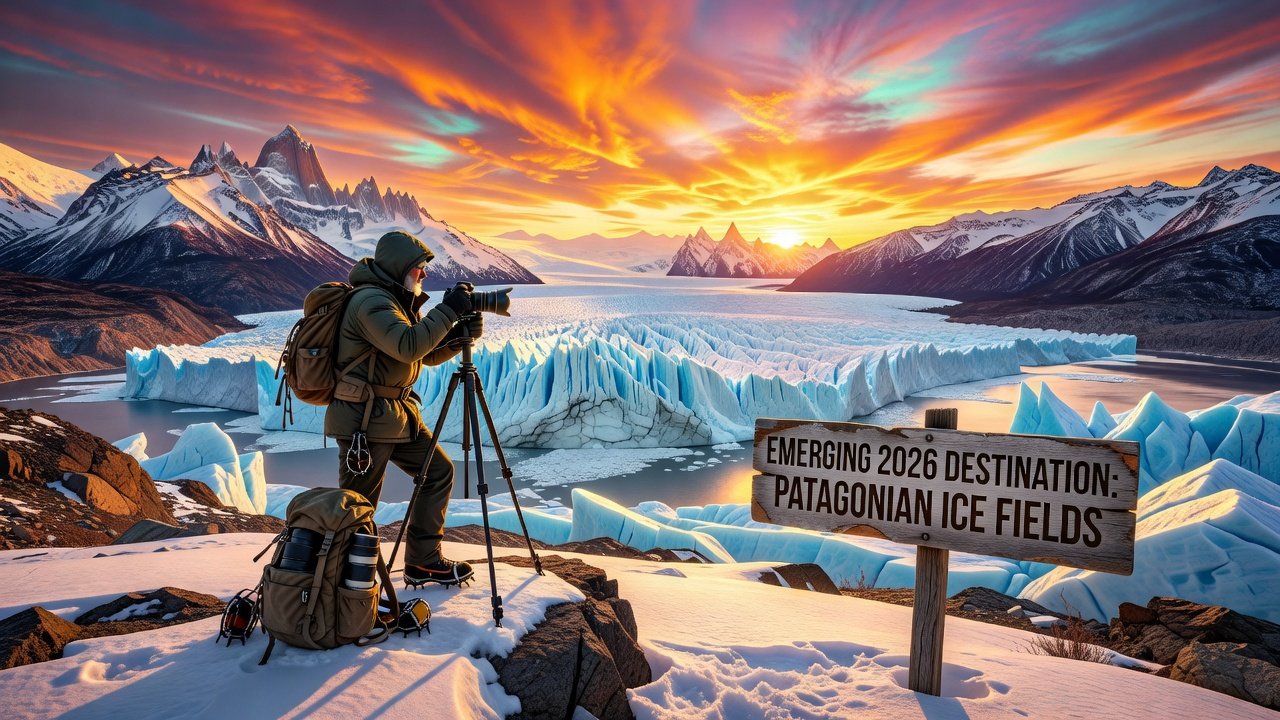
The vast ice fields deliver striking blue tones against jagged peaks, ideal for wide-angle landscape work. Arrive during the austral spring for stable weather and dramatic cloud formations that add depth to compositions. Position yourself at elevated viewpoints to incorporate foreground ice formations with distant mountain ranges, using a polarizing filter to enhance glacial colors without over-saturating the sky.
2. Socotra Island, Yemen
Known for its otherworldly dragon's blood trees and endemic species, Socotra rewards macro and environmental portraiture. Shoot during early morning to capture soft light filtering through the canopy, emphasizing the alien textures of the trees. Combine these with local Bedouin cultural elements for layered storytelling images that highlight both biodiversity and human adaptation.
3. Svalbard Archipelago, Norway
Arctic conditions here provide pristine backdrops for wildlife photography, especially polar bears and seabirds. Summer expeditions benefit from 24-hour daylight, allowing flexible shooting schedules around animal activity patterns. Use long telephoto lenses from safe distances while incorporating ice floes as leading lines to guide the viewer's eye toward the subject.
4. Rwenzori Mountains, Uganda
The misty peaks and rare mountain gorillas create powerful opportunities for both landscape and wildlife imagery. Hike during the drier months to avoid dense fog that obscures details. Focus on environmental portraits of local Bakonzo communities alongside the primates, using natural frames from vegetation to add context and depth.
5. Faroe Islands, Denmark
Steep cliffs and abundant puffin colonies offer exceptional seascape and wildlife compositions. Visit in late spring when puffins nest, positioning low to the ground for intimate perspectives. Long-exposure techniques on coastal waterfalls create silky water effects that contrast beautifully with the rugged volcanic rock formations.
6. Altai Mountains, Mongolia
Nomadic herding culture meets expansive steppes and snow-capped peaks for authentic cultural travel photography. Summer golden hours reveal vibrant green valleys dotted with traditional gers. Capture candid moments of daily life using wide apertures to isolate subjects against the vast horizon, always requesting permission first.
7. Aysén Region, Chile
Remote fjords and gaucho traditions provide layered narrative scenes blending nature and heritage. Autumn brings rich color changes in the forests surrounding the fjords. Use graduated neutral density filters to balance bright skies with darker foregrounds during sunrise sessions over the water.
8. Raja Ampat, Indonesia
World-class reefs and limestone islands excel for both underwater and aerial photography. Dry season offers clearest visibility for reef work with macro lenses highlighting vibrant marine life. Drone shots from above reveal the intricate patterns of the archipelago when permitted by local authorities.
9. Torres del Paine Extensions, Argentina
Less-visited border areas around the famous towers allow fresh angles on granite formations and guanaco herds. Shoulder seasons reduce crowds while maintaining good trail access. Experiment with panoramic stitching techniques to convey the immense scale of the landscape in single compelling frames.
10. Kamchatka Peninsula, Russia
Active volcanoes and brown bear populations deliver raw wilderness imagery. Summer provides accessible trails and reliable bear sightings near salmon streams. Position yourself at safe distances using super-telephoto lenses while incorporating steam vents as atmospheric elements in the background for added drama.
Gear Recommendations for 2026 Travel Photography
Selecting appropriate equipment is critical for remote and variable conditions encountered at these destinations. Prioritize a weather-sealed full-frame mirrorless body paired with a versatile 24-70mm f/2.8 zoom for everyday landscapes and a 100-400mm telephoto for wildlife. Include a lightweight carbon-fiber tripod with a ball head for stability during long exposures and low-light situations. Drone operators should select models with obstacle avoidance and 4K video capabilities, while always verifying airspace regulations in advance. Additional essentials encompass extra high-capacity batteries, fast memory cards, a set of neutral density and polarizing filters, and a rugged, waterproof backpack with customizable dividers. Consider a portable power station for multi-day treks where recharging options are limited. These choices balance portability with performance, ensuring you can respond quickly to fleeting light and animal moments without being weighed down.
Seasonal Timing and Advanced Composition Techniques
Optimal timing dramatically improves image quality and reduces logistical challenges. Research local weather patterns and animal migration cycles for each destination, booking trips during shoulder seasons when possible to balance crowd levels with favorable conditions. Golden hour and blue hour remain foundational, but also explore twilight periods for unique color palettes. Composition benefits from deliberate use of the rule of thirds, leading lines created by rivers or ridges, and natural frames formed by archways or tree branches. For wildlife, pre-visualize likely action zones and pre-focus accordingly. Layer multiple elements—foreground interest, midground subjects, and background drama—to build depth. Practice panning techniques with moving subjects like birds or vehicles to convey motion while keeping the primary element sharp. These methods, combined with careful exposure bracketing for high-contrast scenes, produce files rich in post-processing potential.
Real Traveler Examples and Before-and-After Insights
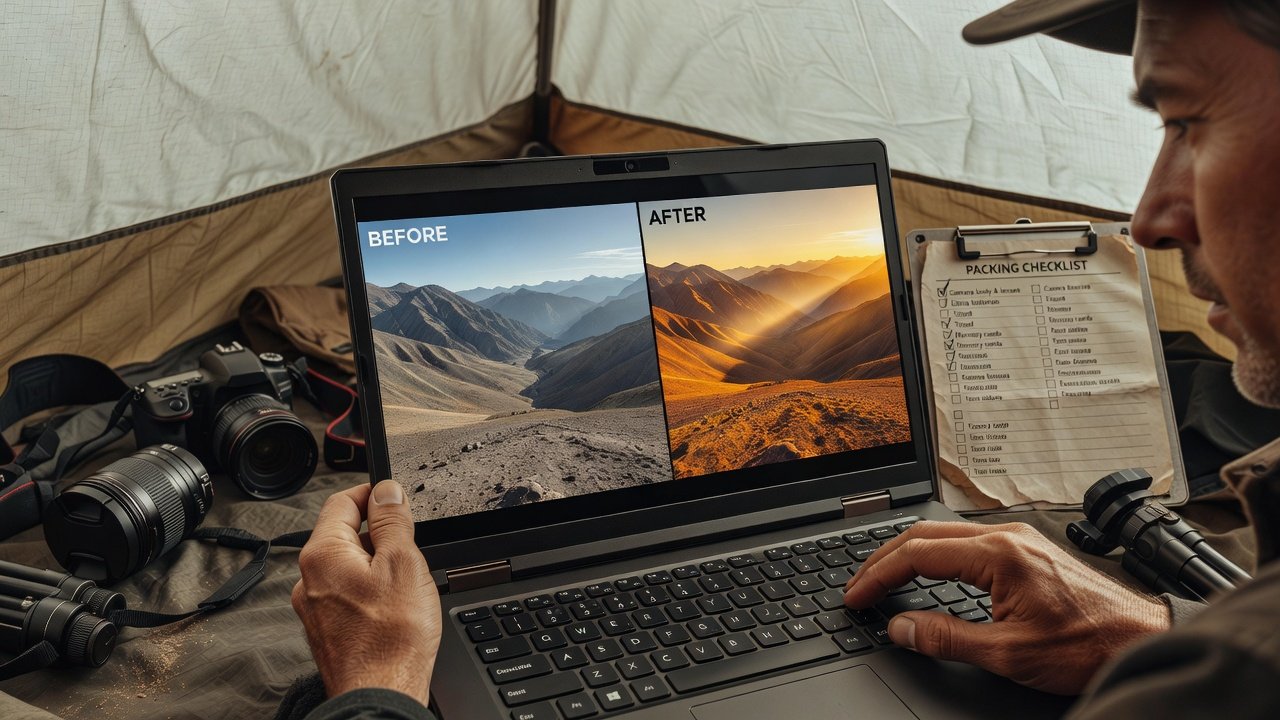
Practical application of these techniques yields noticeable improvements, as demonstrated by experienced photographers. One traveler documented Socotra's dragon blood trees first at harsh midday, resulting in flat, washed-out colors, then returned at dawn with a low angle and polarizing filter, transforming the same scene into a textured, three-dimensional composition with rich earth tones. In Svalbard, an initial wide shot of a polar bear on ice appeared small and indistinct against the bright background; adjusting exposure compensation by two stops and switching to a longer lens produced a powerful, intimate portrait with clear detail in the fur and surrounding ice textures. Another example from the Faroe Islands involved refining a cliffside puffin image by incorporating a foreground rock formation as a leading line, elevating a simple wildlife snapshot into a balanced environmental portrait that told a stronger story of habitat and scale.
Packing Checklists with Detailed Explanations
- Camera body with weather sealing and two backup bodies if budget allows, to mitigate equipment failure risks in remote areas.
- Core lenses: wide-angle 14-24mm, standard 24-70mm, and telephoto 100-400mm, covering the full range needed for landscapes through wildlife.
- Extra batteries and chargers plus a solar-powered bank for extended off-grid periods.
- Memory cards in multiple capacities, formatted and labeled before departure.
- Lightweight yet sturdy tripod plus quick-release plates for rapid setup.
- Filter kit including circular polarizer, three-stop and six-stop ND filters for water and sky control.
- Weatherproof camera bag with padded compartments and rain cover.
- Portable hard drive or cloud backup device for daily image transfers.
- Basic repair kit with lens tissues, sensor cleaning supplies, and multi-tool.
- Printed copies of permits, insurance documents, and emergency contacts alongside digital versions.
Ethical Photography Guidelines
Responsible practices protect the very subjects that attract photographers. Maintain minimum safe distances from wildlife and never use flash or playback sounds that could disturb animals. For cultural portraits, always obtain explicit permission and consider offering prints or digital files as reciprocity. Minimize physical impact by remaining on established paths and avoiding trampling vegetation for better angles. Support local economies by hiring indigenous guides who understand both the terrain and community sensitivities. When sharing images online, credit locations accurately without revealing sensitive sites that could lead to overcrowding. These principles align with broader conservation efforts promoted by organizations such as UNESCO and the National Park Service, ensuring future generations can enjoy the same pristine conditions.
FAQ on Permits and Editing Workflows
What permits are typically required for international photography?
Many protected areas mandate advance permits for drones or commercial use. Contact destination tourism boards and national park authorities several months ahead to secure necessary documentation and avoid on-site restrictions.
How do I handle image backup during extended remote travel?
Implement a three-tier system: dual-card recording in-camera, daily transfers to a portable SSD, and periodic satellite-enabled cloud uploads when connectivity allows.
Which editing workflow produces consistent results across varied lighting conditions?
Begin in Lightroom with global adjustments for exposure and white balance, apply localized masks for sky and foreground separation, then move select files to Photoshop for advanced retouching and noise reduction before final export.
Are there specific rules for photographing indigenous communities?
Yes, many regions require formal consent forms. Research cultural protocols in advance and prioritize building relationships over quick captures to ensure respectful representation.
What post-processing steps best preserve natural colors in high-contrast scenes?
Shoot in raw format, merge bracketed exposures using HDR software when necessary, and apply subtle vibrance adjustments rather than aggressive saturation to maintain authenticity.
Conclusion: Turning Visual Wanderlust into Professional Results
Applying these detailed strategies across the listed 2026 destinations equips photographers to create compelling, ethical, and technically strong images. Thorough preparation in gear selection, timing, composition, and post-processing transforms travel into a creative pursuit that produces lasting work. Begin planning your itinerary with these principles in mind to maximize both the journey and the resulting portfolio.
No comments yet. Be the first!