 PlaceBee
Why Choose Hidden Gems Road Trips in 2026?
Travelers in 2026 are increasingly drawn to authentic experiences that bypass overcrowded landmarks and tourist circuits. Hidden gems road trips focus on underrated destinations where natural beauty, local culture, and solitude take center stage. These journeys reward those willing to venture beyond guidebook favorites with quieter trails, uncrowded viewpoints, and genuine interactions with small communities.
Success depends on careful preparation because remote routes often lack services and reliable cell coverage. This comprehensive guide addresses vehicle readiness, seasonal planning, detailed packing recommendations, seven fully fleshed-out itineraries, booking strategies, common pitfalls, and dynamic research methods. By following these steps you can craft low-impact adventures that feel personal and memorable.
Vehicle Preparation Tips for Remote Routes
Begin with a professional inspection covering tires, brakes, fluids, belts, and battery at least fourteen days before departure. Replace worn tires with all-terrain models rated for gravel and light off-road use, and always carry a full-size spare plus a portable 12-volt air compressor. Pack a comprehensive roadside kit that includes jumper cables, a multi-tool, duct tape, zip ties, and a headlamp for nighttime repairs. Download offline topographic maps and GPX files for every planned segment, then store printed backups in a waterproof folder. Test your vehicle’s real-world fuel range on a loaded trial run; many hidden destinations sit more than fifty miles from the nearest fuel pump. Consider adding a rooftop cargo box or hitch-mounted carrier if your trip spans more than five days to keep the interior uncluttered and comfortable.
Seasonal Timing Considerations
Spring and fall deliver the most reliable weather windows across the majority of hidden-gem regions while keeping visitor numbers low. In the Southwest, March through May and September through early November provide comfortable daytime temperatures and reduced flash-flood risk. Northern states and high-elevation zones reward summer travel from June through August when snow has melted from forest roads. Desert routes become viable in winter only with cold-weather sleeping bags rated to twenty degrees Fahrenheit and four-wheel-drive capability. Always consult current fire restrictions, seasonal road closures, and wildlife closure notices through official agency websites before locking in travel dates.
Essential Packing List for Hidden Gems
Pack clothing in lightweight, quick-dry layers that adapt to rapid temperature swings between day and night. Include a reliable water filtration system or purification tablets plus two extra collapsible containers. A high-lumen headlamp with spare batteries, a lightweight backpacking tent or hammock with rain fly, and a compact first-aid kit stocked with blister treatment and broad-spectrum insect repellent form the core of any kit. Add bear spray and current wildlife safety briefings for bear country, plus a compact solar charger to keep communication devices powered during multi-day stretches without outlets.
Seven Example Hidden Gems Road Trip Routes
Each itinerary below includes specific driving segments, overlooked stops, and suggested overnight areas chosen for minimal crowds and maximum scenery.
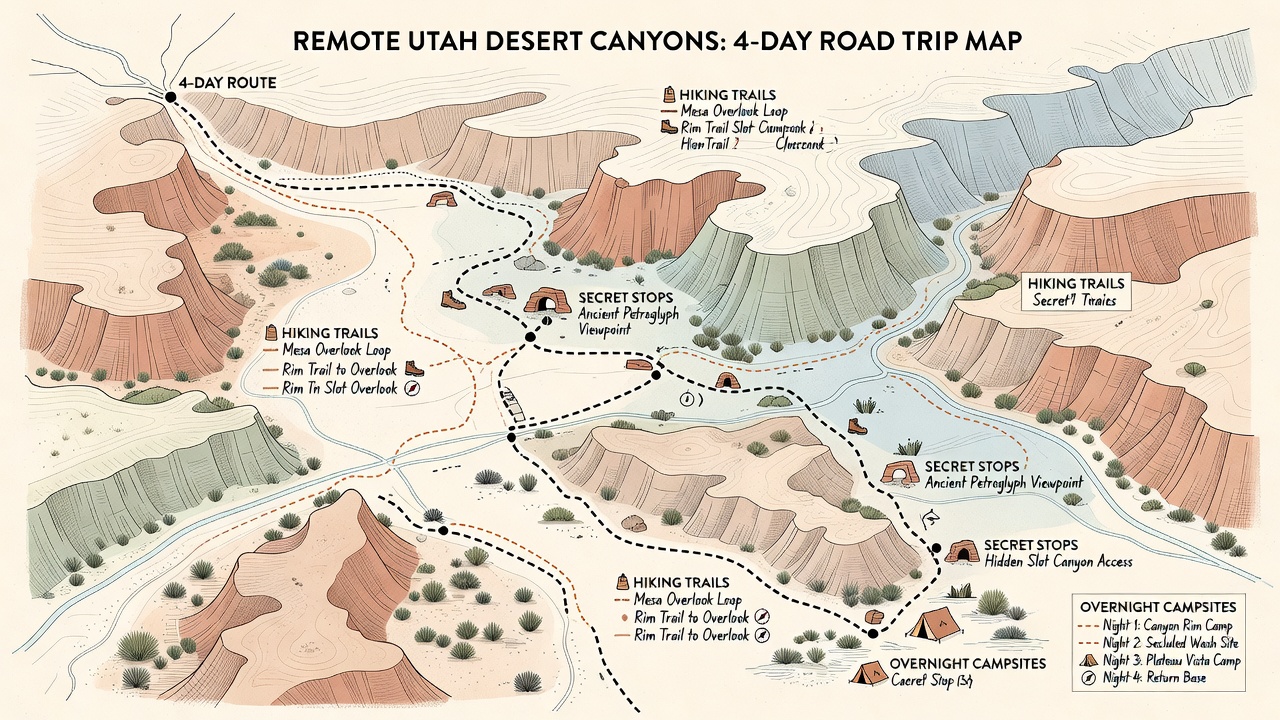
1. Utah’s San Rafael Swell Loop (4 days)
Begin in Green River and head south on unpaved roads to Little Wild Horse Canyon for a moderate slot-canyon hike. Continue to the Muddy Creek badlands for dispersed camping under some of the darkest skies in the lower forty-eight. End the loop near the eastern rim with sunrise photography at the Calf Creek overlook before returning via the scenic but little-traveled Highway 24.
2. Northern Michigan’s Upper Peninsula Backroads (5 days)
Start in Marquette and drive to the Presque Isle River waterfalls, then continue to the remote Porcupine Mountains Wilderness State Park. Explore quiet Lake Superior shoreline at Union Bay and spend two nights at rustic cabins along the Presque Isle River for early-morning wildlife viewing before looping back through the Hiawatha National Forest.
3. Southern Oregon’s Volcanic Legacy Byway (3 days)
Depart Klamath Falls and travel the Modoc Plateau to the lesser-visited eastern sections of Lava Beds National Monument. Hike to hidden lava tube entrances and soak in undeveloped hot springs near the California border before overnighting at a small Forest Service campground with only ten sites.
4. West Virginia’s Highland Scenic Highway (3 days)
Leave Richwood and drive the Highland Scenic Highway through Cranberry Glades Botanical Area, stopping at remote overlooks rarely visited by out-of-state travelers. Continue to the Williams River for waterfall hikes and primitive camping at the Tea Creek Campground before completing the loop via forest service roads.
5. New Mexico’s Gila National Forest Loop (4 days)
Base near Silver City and explore the Gila Cliff Dwellings National Monument early in the morning before crowds arrive. Drive further into the wilderness to natural hot springs along the Mimbres River and overnight at dispersed sites near ghost towns that see fewer than a dozen visitors per week.
6. Idaho’s Sawtooth Backcountry (5 days)
Begin in Stanley and take lesser-used forest roads past Redfish Lake to trailheads leading into the Sawtooth National Recreation Area. Hike to alpine lakes accessible only by rough dirt tracks and camp at small pullouts along the Salmon River before returning via the Ponderosa Pine Scenic Byway.
7. Coastal Maine’s Downeast Unpaved Roads (4 days)
Start in Machias and follow the Bold Coast scenic drive to remote coves and the Quoddy Head region. Visit hidden tidal pools and spend nights at primitive campgrounds overlooking the Bay of Fundy with minimal facilities and maximum privacy.
Practical Booking Advice for Low-Key Travel
Reserve any required dispersed camping permits through the U.S. Forest Service website at least thirty days ahead when quotas apply. Check Recreation.gov for limited-entry trailhead permits and small campground reservations. Favor independent motels in gateway towns rather than national chains; these properties often hold last-minute availability and provide current local knowledge about road conditions.
Mistakes to Avoid on Hidden Gem Road Trips
Never rely solely on cell service for navigation; always maintain offline maps and a paper atlas. Avoid driving unfamiliar gravel roads after dark. Do not assume every Forest Service road is passable for low-clearance vehicles—research recent trip reports. Overpacking water is safer than underpacking; carry at least one gallon per person per day in arid zones. Finally, never leave valuables visible in parked vehicles at trailheads.
Comparing Hidden Gems to Mainstream Travel
Iconic corridors such as Route 66 or the Pacific Coast Highway deliver recognizable scenery yet frequently involve traffic jams, expensive lodging, and crowded viewpoints. Hidden-gem routes deliver comparable natural drama at lower cost, greater solitude, and stronger connections with local communities. The primary trade-off is increased self-reliance and reduced infrastructure, which many travelers consider a worthwhile exchange for authentic experiences.
How to Discover New Hidden Spots Dynamically
Visit local ranger stations upon arrival and ask staff for current recommendations on lightly used roads and campsites. Cross-reference recent conditions on official Bureau of Land Management district pages and state tourism backroad guides. Combine topographic maps with satellite imagery to identify promising pullouts, then verify access rules before committing to a new route.
FAQ
How do I stay safe on remote road trips?
Share your detailed itinerary with a trusted contact, carry extra water and fuel, and monitor National Park Service and Forest Service alerts for weather and road closures before each segment.
What sustainability practices should I follow?
Strictly adhere to Leave No Trace principles, camp only on established surfaces, pack out all waste, and purchase fuel and supplies from small local businesses to support rural economies.
How can I research new hidden gems while traveling?
Stop at visitor centers daily, review the most recent trip reports on official agency websites, and adjust plans based on real-time ranger input while respecting any temporary closures or permit requirements.

No comments yet. Be the first!