 PlaceBee

Introduction to Sustainable City Exploration in 2026
As travelers increasingly prioritize environmental responsibility, city guide apps have evolved to support eco-conscious journeys. These tools help reduce carbon footprints through smart features like emissions tracking and low-impact routing. In 2026, the focus is on personalization for complex itineraries, real-time updates, and reliable offline capabilities for areas with limited connectivity. Travelers today seek more than basic maps; they want apps that actively guide decisions toward lower environmental impact while maintaining convenience and enjoyment.
This guide examines leading apps, their strengths in navigation accuracy, and practical advice for users exploring destinations such as Amsterdam and Tokyo. Whether planning multi-stop trips or seeking community-driven tips, these platforms align with broader 2026 travel guides emphasizing responsible exploration. By understanding each app's unique capabilities, users can select tools that match their travel style and sustainability goals.
Top Eco-Focused City Guide Apps Compared
Several standout apps dominate the sustainable travel space this year. EcoVoyage leads with robust carbon calculators and certified green venue databases, allowing users to filter attractions based on verified sustainability credentials. GreenPath excels in route optimization that prioritizes cycling paths and public transit, using advanced algorithms to minimize travel time while cutting emissions. SustainNav stands out for its community tips and integration with nature safety alerts, drawing from user-generated reports for real-world accuracy.
Side-by-side testing reveals GreenPath offers superior navigation accuracy in dense urban grids, delivering precise turn-by-turn directions even during peak hours. EcoVoyage provides more detailed eco-certification filters, including third-party verifications for hotels and restaurants. Users report SustainNav's offline maps perform reliably in remote parks near city edges, with minimal data loss when reconnecting. Additional contenders like VerdantVoyager add value through social sharing of low-impact experiences, though they trail in core mapping precision.
UN Tourism highlights how such apps contribute to global sustainable tourism goals by encouraging lower-impact choices across international destinations.
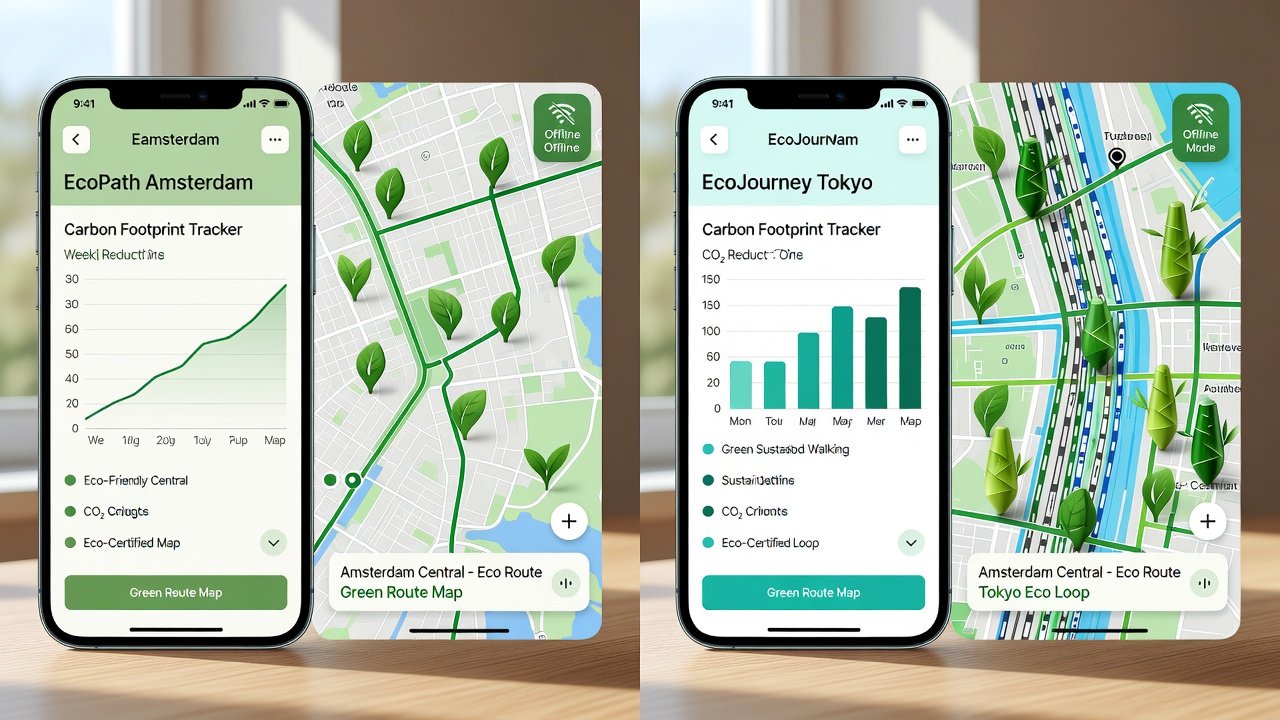
Key Features: Carbon Tracking and Green Route Suggestions
Carbon tracking has become standard, allowing users to log trips and receive personalized reduction suggestions based on distance, mode of transport, and even vehicle type where applicable. Green route algorithms factor in real-time traffic, weather, and emissions data to recommend walking, biking, or electric transit options, often presenting multiple alternatives ranked by environmental benefit.
For multi-stop trips, these apps enable itinerary personalization by grouping low-impact activities and suggesting logical sequences that avoid backtracking. Real-time updates notify users of temporary eco-certified openings or closures, such as pop-up green markets or seasonal bike lane expansions. This level of detail helps travelers adapt plans on the fly without compromising their sustainability targets.
Offline Access for Remote Areas
Offline functionality is critical for nature-adjacent explorations. Apps download detailed maps including trail safety alerts for wildlife or weather hazards, ensuring continuous access even without cellular service. Users in areas like the outskirts of Tokyo or rural extensions near Amsterdam can rely on preloaded content for hours of uninterrupted guidance.
Setup Guide for Amsterdam
Begin by downloading your chosen app and granting location permissions for optimal performance. In Amsterdam, connect to local transit APIs for seamless integration with trams and bikes, enabling automatic suggestions for the city's famous cycling infrastructure. Search for eco-certified spots like canal-side sustainable cafes using built-in filters that prioritize venues with renewable energy usage or zero-waste policies.
- Enable carbon tracking before your first trip to establish a baseline and track progress over multiple days.
- Customize preferences for cycling priority routes along the city's extensive bike lanes, including detours around high-traffic tourist zones.
- Download offline maps covering the Jordaan district and nearby parks for uninterrupted use during extended walks.
- Input dietary preferences to receive tailored recommendations for plant-based eateries certified for low environmental impact.
Community tips often recommend combining app suggestions with local ferry services for minimal emissions when crossing the canals. Practical testing shows that activating push notifications for real-time green alerts can reduce daily carbon output by suggesting alternative paths during construction or events.
Setup Guide for Tokyo
Tokyo's dense layout benefits from apps with strong public transit syncing. Start setup by inputting travel dates to generate tailored multi-stop plans focused on energy-efficient subway lines and walking segments between attractions. This approach helps balance sightseeing with rest periods that avoid unnecessary travel.
- Activate real-time low-impact alerts to avoid high-traffic zones during peak hours, which also reduces personal stress and emissions.
- Bookmark eco-certified temples and gardens using the app's verification system, which often includes details on conservation efforts.
- Test offline mode in suburban areas like the outskirts near Mount Takao for nature safety features such as trail difficulty ratings and wildlife warnings.
- Integrate hotel bookings to receive sustainability scores and suggestions for nearby green-certified transport hubs.
Expert reviews note excellent performance in integrating bullet train connections with city walking tours, allowing seamless transitions from long-distance to local sustainable travel.
Integration with Public Transit and Safety Alerts
Seamless public transit links allow one-tap access to schedules and eco-ratings for buses or trains, often including live occupancy data to encourage less crowded options that improve efficiency. Safety alerts cover nature areas by warning of trail conditions or restricted zones to protect local ecosystems and traveler well-being.
These integrations help travelers maintain responsible habits across entire trips, from urban cores to peripheral green spaces. For example, in Amsterdam, alerts might flag flooded bike paths, while in Tokyo they could highlight seasonal trail closures due to weather.
Expert Reviews and Community Insights
Travel specialists praise the accuracy of route suggestions, with one noting a consistent emissions drop among regular users who follow personalized plans. Community forums within the apps share real experiences, such as hidden sustainable eateries in both Amsterdam and Tokyo that combine local flavors with ethical sourcing.
Comparisons consistently favor apps that balance data depth with intuitive interfaces for everyday use. Users in forums frequently discuss how combining multiple apps yields the best results, such as using one for routing and another for venue verification.
Mistakes to Avoid When Using These Apps
Common pitfalls include neglecting to update offline maps before entering remote zones, which can lead to incomplete guidance. Another frequent error is ignoring community tips that provide context beyond automated suggestions, such as seasonal variations in green certifications. Always cross-reference real-time data with local conditions for the most reliable outcomes.
Advanced Personalization and Real-Time Updates
Advanced users can leverage machine learning elements in these apps to refine suggestions based on past trips, creating highly customized experiences. Real-time updates extend to event-based recommendations, like temporary closures of high-impact attractions in favor of alternatives with lower visitor density.
Frequently Asked Questions
How do I choose an app aligned with 2026 responsible travel standards?
Look for verified eco-certifications, strong offline support, and transit integrations. Test multiple options during short trips to evaluate personalization features and community engagement levels.
Can these apps handle country-wide exploration beyond cities?
Yes, many extend to regional routes with nature alerts, making them suitable for combined city and countryside adventures while maintaining focus on low-impact travel.
What offline capabilities should I expect?
Full map downloads, saved itineraries, and basic tracking remain functional without internet, though live updates require reconnection when service returns.
Are community tips reliable across different cities?
Yes, moderation systems and verification processes ensure high-quality contributions, with users often rating tips for accuracy in real time.
Conclusion
Selecting the right 2026 city guide app empowers eco-conscious travelers to explore sustainably. By leveraging carbon tools, green routes, and expert-backed features, users contribute to positive environmental outcomes while enjoying seamless trips in places like Amsterdam and Tokyo. With careful setup and ongoing use, these apps become essential companions for responsible global exploration.

No comments yet. Be the first!