 PlaceBee

Introduction: Choosing the Right Travel Guide Format in 2026
Travel planning has evolved significantly by 2026, with digital and print formats each offering distinct advantages for city guides, country guides, and destination guides. Travelers must weigh factors like accessibility, real-time updates, and portability when deciding how to prepare for trips. This in-depth comparison helps you select the optimal format based on your journey type, whether it's a quick weekend getaway or an extended international expedition. Understanding the nuances allows you to maximize efficiency, reduce stress, and enhance your overall experience regardless of whether you prefer the glow of a screen or the feel of paper pages.
Accessibility and Real-Time Updates
Digital travel guides excel in accessibility because they can be downloaded instantly to smartphones, tablets, or e-readers. Updates arrive automatically, ensuring you receive the latest information on border rules, opening hours, or new attractions without purchasing a new edition. This proves especially valuable during rapidly changing global conditions such as health advisories or political shifts. Print guides, however, provide a tactile experience that many travelers prefer for focused reading during flights or in areas with limited connectivity. For instance, when exploring remote regions, digital formats allow quick searches for nearby restaurants or hiking trails using integrated GPS features. Print versions shine during offline scenarios where battery life becomes a concern, offering uninterrupted access without relying on technology. Many 2026 digital platforms also include multimedia elements like embedded videos and audio tours that bring destinations to life in ways static print cannot match.
Portability Considerations for Different Trip Types
Portability often determines the winner between these formats. A single digital device can store dozens of guides for multiple destinations, reducing luggage weight. This proves ideal for multi-country itineraries or extended backpacking adventures across continents. In contrast, print books offer durability without needing power sources, making them suitable for adventure travel in rugged environments where extreme temperatures or moisture might damage electronics. Consider a two-week European tour: carrying three physical city guides adds bulk and weight to your carry-on, while a digital app consolidates everything into one lightweight tablet or phone. For families traveling with children, print editions can serve as engaging activity books during long drives, encouraging offline interaction and discussion about upcoming stops.
Real-World Examples of Using Each Format on the Go
Imagine navigating Tokyo with a digital guide that includes interactive maps and language translation tools. Users report faster route planning compared to flipping through print pages, especially when trying to locate hidden izakayas or efficient subway transfers during rush hour. On a safari in Africa, a print country guide withstands dust and provides reliable reference without signal issues, allowing you to annotate pages with personal notes about wildlife sightings. Another scenario involves family road trips across the United States, where digital guides offer crowd-sourced reviews updated daily while print editions deliver curated itineraries free from screen distractions that might interrupt conversations. Solo travelers in Southeast Asia often combine both by using digital apps for last-minute bookings and keeping a slim print pocket guide for cultural etiquette tips. These examples highlight how context shapes the ideal choice.
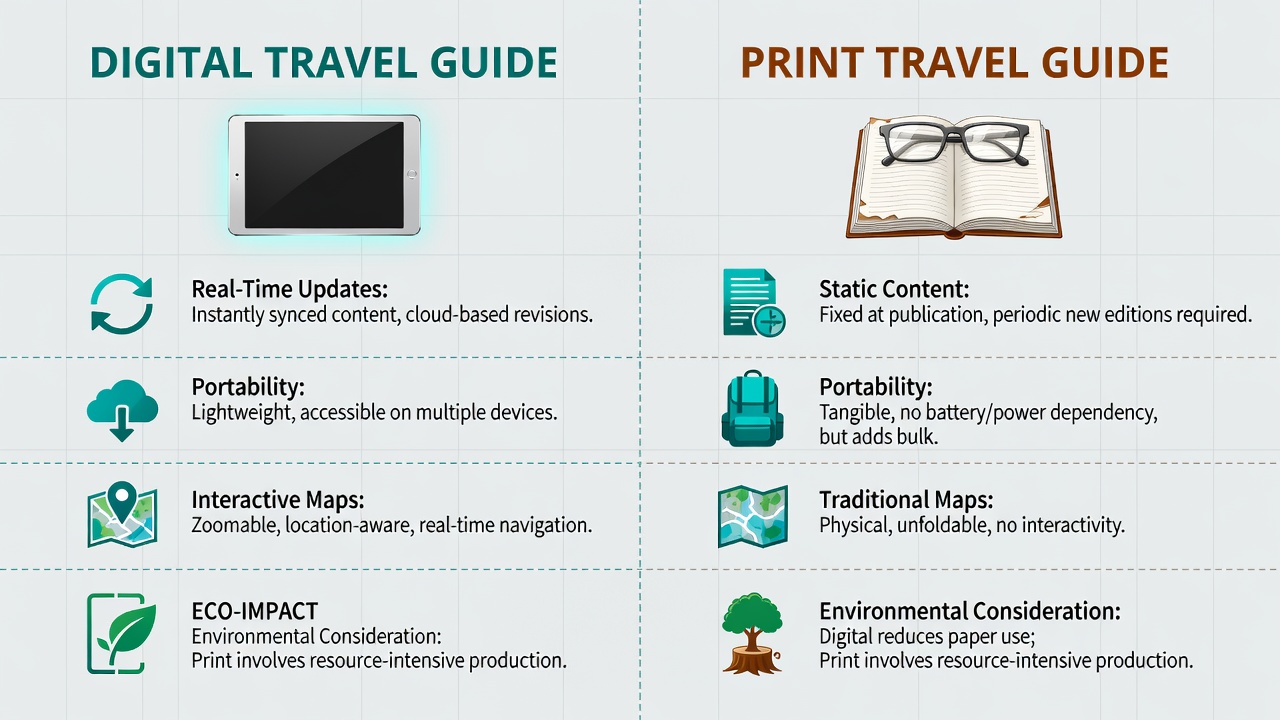
Step-by-Step Decision Framework Based on Trip Type
Follow this framework to decide between formats:
- Assess connectivity: Choose digital for urban trips with reliable Wi-Fi and print for off-grid adventures where signal drops frequently.
- Evaluate duration: Short trips favor digital for quick access and minimal packing; longer journeys may benefit from hybrid use to balance convenience and reliability.
- Review update needs: Frequent travelers should prioritize digital for current visa and health advisories that change often.
- Factor in group size: Solo explorers often prefer digital for customization; families may enjoy sharing a physical book around the campfire.
- Consider special requirements: Photographers and tech enthusiasts lean digital while history buffs appreciate the depth and annotations possible in print editions.
Side-by-Side Feature Comparison
- Updates: Digital provides instant revisions and notifications; print requires new purchases for each edition.
- Searchability: Digital offers powerful keyword search and filters; print relies on traditional indexes and table of contents.
- Environmental notes: Digital reduces paper use but increases device energy consumption and e-waste concerns.
- Cost longevity: Print offers one-time purchase value while digital may involve subscriptions or in-app purchases over time.
- Interactivity: Digital supports GPS integration, bookmarks, and sharing features; print allows physical highlighting and margin notes.
- Durability: Print withstands rough handling in challenging conditions; digital devices require protective cases and regular charging.
Cost Considerations and Environmental Impact
Budget-conscious travelers appreciate that digital guides often cost less upfront than premium print editions. Environmentally, digital formats minimize paper waste, aligning with sustainable travel practices promoted by organizations like Lonely Planet. However, the production and disposal of electronic devices carry their own footprint, encouraging mindful usage and recycling programs. Print guides from publishers like those featured on National Geographic Travel use recycled materials in many 2026 editions, balancing ecological concerns. The United Nations World Tourism Organization also emphasizes responsible choices at UNWTO, suggesting travelers consider both formats' lifecycle impacts when planning.
Hybrid Approaches and Common Questions
FAQ
Can I combine both formats effectively? Yes, many travelers use digital for planning and real-time navigation while relying on print for on-site reference and deeper reading.
Which is better for budget trips? Digital typically reduces expenses through free updates and app bundles, though print can be found secondhand for added savings.
How do environmental impacts compare? Digital lowers deforestation risks but requires responsible e-waste management at end of device life.
Are there accessibility issues with digital? Screen readers and adjustable fonts help, though some users favor print for visual comfort and reduced eye strain on long flights.
What about data privacy in digital guides? Reputable apps minimize tracking, but always review permissions before downloading.
Mistakes to Avoid When Choosing Formats
One common mistake is underestimating battery life on international trips, leading travelers to rely solely on digital without backup power banks. Another is overlooking regional restrictions on e-books or apps in certain countries. Avoid assuming all digital content remains free after initial download, as some premium maps require ongoing subscriptions. Finally, do not ignore print's role in preserving memories through handwritten notes that digital files rarely capture as personally.
Conclusion: Making Your Choice for 2026 Adventures
Ultimately, the best format depends on your specific travel style and priorities. Digital guides lead in convenience and updates, while print offers reliability and focus. Testing both on shorter trips can reveal personal preferences, ensuring efficient and enjoyable journeys ahead. Whether you choose one or blend the two, thoughtful selection enhances every destination experience.

No comments yet. Be the first!