 PlaceBee

Why a Capsule Wardrobe Transforms Travel
Packing light while maintaining outfit variety is one of the biggest challenges for frequent travelers. A well-planned capsule wardrobe solves this by focusing on versatile, high-quality pieces that mix and match effortlessly. This approach reduces luggage weight, minimizes decision fatigue, and supports sustainable travel by encouraging fewer purchases over time. Travelers who adopt capsule strategies often report feeling more confident and prepared, regardless of unexpected itinerary changes or weather shifts. Whether you're heading from a tropical beach to an urban center or navigating changing seasons, the right selections make transitions seamless. Below, we break down the exact criteria, fabrics, and strategies used by seasoned travelers to achieve maximum versatility with minimal items.
Step-by-Step Selection Criteria
Start by defining your trip's climate range and activities. Choose a neutral color palette—think black, navy, beige, and white—to maximize combinations. Limit yourself to 10–15 core items for a two-week trip. Begin with bottoms that serve multiple purposes, such as dark jeans for daytime exploration and evening outings. Next, select tops that layer well and vary in formality. Include at least one dress or jumpsuit for quick, polished looks. Footwear should prioritize comfort and versatility, with one pair suitable for walking long distances and another that transitions to smarter settings. Finally, review every item for its ability to pair with at least three others in your collection. This methodical process ensures no wasted space or redundant pieces.
- Identify 3–4 bottoms that pair with everything (jeans, trousers, shorts, skirt).
- Select 5–7 tops in varying weights and sleeve lengths.
- Add 2 outer layers and 1–2 dresses or jumpsuits for instant polish.
- Include versatile shoes: one pair for walking, one for dressier occasions.
- Choose accessories that elevate multiple outfits without adding bulk.
Fabric Choices for Durability and Comfort
Prioritize wrinkle-resistant, quick-dry materials like merino wool, Tencel, and recycled polyester blends. These hold up to multiple wears and pack small. Merino wool naturally resists odors, making it ideal for extended wear between washes. Tencel offers breathability and a soft drape that mimics luxury fabrics while remaining easy to care for. Recycled polyester blends provide durability and water resistance without the environmental footprint of virgin materials. Avoid 100% cotton for most pieces unless it's a structured item, as it wrinkles and dries slowly. Test fabrics by crumpling a swatch in your hand—if it springs back smooth, it will travel well. Consider performance features such as UV protection for sunny destinations or stretch for active days. These choices directly impact how many times you can re-wear an item before needing laundry facilities.
Layering Strategies Without Bulk
Build outfits through thin, compressible layers rather than heavy single items. A base layer of merino, a mid-layer fleece or lightweight knit, and a shell jacket create multiple looks while fitting in a carry-on. Adjust for climate by swapping the mid-layer for a packable down vest in cooler weather or removing it entirely in heat. Use lightweight scarves or shawls as both accessories and extra warmth. This system allows you to adapt from morning chill to afternoon heat without overpacking. 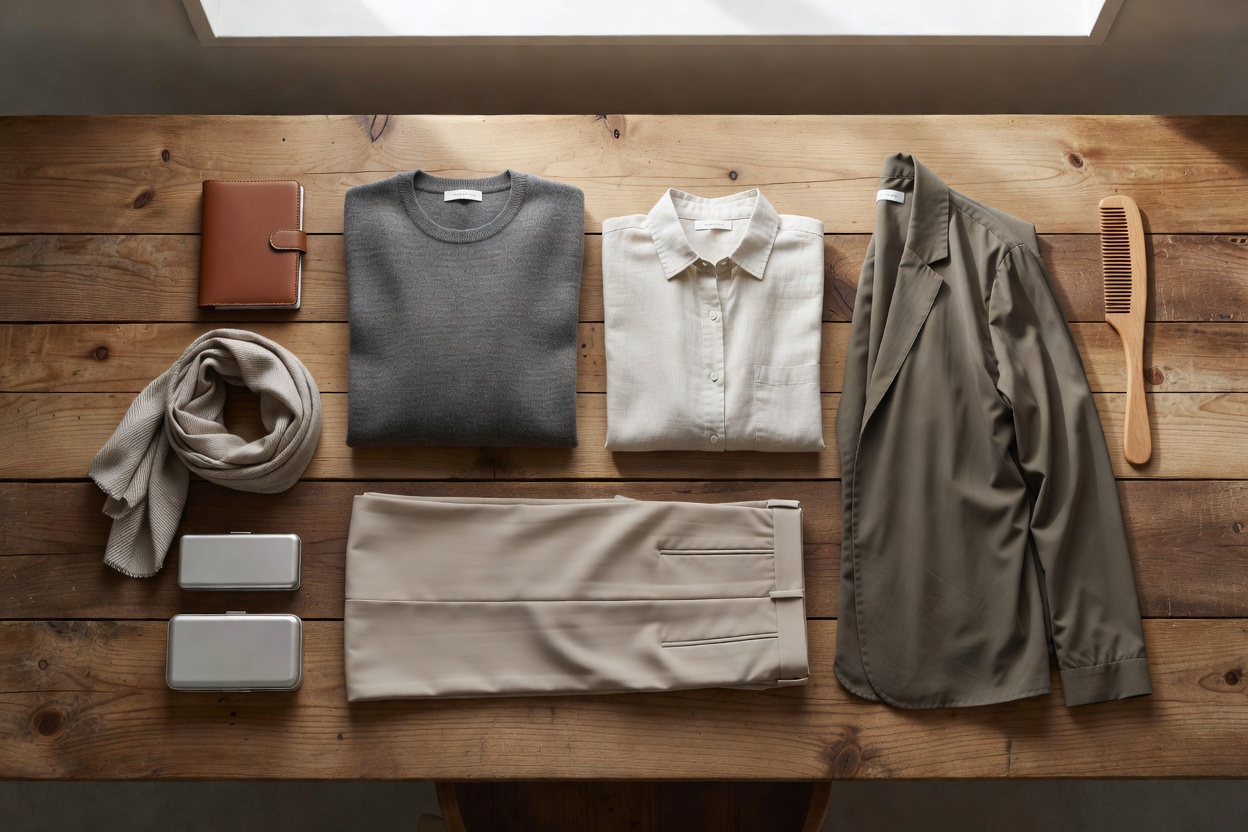
Real-World Examples: Beach-to-City Transitions
Imagine departing a Caribbean beach for New York streets. Start with linen shorts and a tank as your base. Add a lightweight blazer and swap sandals for loafers to instantly elevate the look for city dinners. A neutral midi dress works as a cover-up by day and standalone outfit at night. Another scenario involves moving from mountain hiking to coastal towns: begin with technical pants that zip off into shorts, layered under a windbreaker. Upon arrival at the coast, remove the windbreaker and pair the shorts with a bright tank for a fresh beach vibe. For European city breaks in shoulder season, a tailored trouser, silk blouse, and cashmere cardigan create both daytime sightseeing and evening dining options. These examples demonstrate how the same core pieces adapt through strategic layering and accessory swaps.
Minimalist vs Traditional Packing Lists Comparison
Traditional packers often bring 25+ items with limited repeats. Minimalist capsule users stick to 12–15 pieces, achieving 30+ unique outfits through mixing. The minimalist list cuts luggage weight by up to half while increasing perceived variety. Traditional approaches tend to include multiple similar items for "just in case" scenarios, leading to heavier bags and more laundry. Capsule packing forces intentional choices, resulting in outfits that feel fresh daily. Travelers switching to minimalist methods frequently note reduced stress at airport security and easier navigation through public transport.
Actionable Packing Checklist
- Neutral bottoms: 3 – select one pair of jeans, one tailored trouser, and one versatile short or skirt.
- Tops: 6 – include two long-sleeve button-downs, two short-sleeve tees, one lightweight sweater, and one tank.
- Layering pieces: 2 – a packable jacket and a thin cardigan or fleece.
- Shoes: 2 pairs – supportive walking sneakers and a dressier flat or loafer.
- Accessories: scarf, belt, lightweight jewelry – these multiply outfit options instantly.
- Laundry items: travel detergent sheets and a sink stopper – essential for refreshing pieces mid-trip.
Common Mistakes to Avoid
Many travelers overpack "just in case" items that rarely get worn. Another frequent error is choosing trendy pieces over timeless cuts, limiting future use. Ignoring fabric care labels can lead to unexpected wrinkles or shrinkage. Always test full outfits at home before departure to confirm compatibility. Finally, neglecting accessories means missing opportunities to refresh looks without adding volume.
2026 Sustainable Retailer Recommendations
Look to brands emphasizing recycled materials and ethical production. Check Patagonia for durable merino and organic cotton options. REI offers extensive guides on sustainable travel apparel with performance-focused capsule pieces. Lonely Planet regularly updates sustainable travel gear roundups that highlight new capsule-friendly lines each season. These retailers provide transparent sourcing information and repair programs that extend garment life.
FAQ: Common Sizing and Laundry Concerns
How do I handle sizing across brands?
Stick to two trusted brands for consistency and always check their size charts before ordering. Order one size up for layering room.
What about laundry on the road?
Choose quick-dry fabrics and plan to hand-wash every 3–4 days. A small bottle of concentrated detergent lasts weeks and works in hotel sinks.
Can this work for cold-weather destinations?
Yes—focus on thermal base layers and a packable down jacket that compresses to the size of a water bottle.
How many outfits can I realistically create?
With 12–15 pieces, most travelers generate 25–40 unique combinations through different pairings and accessory changes.
Is it possible to include formal wear?
Absolutely. Add one structured blazer and a dressy top that pairs with your existing bottoms to cover events without extra luggage.
Conclusion
Building a versatile capsule wardrobe is a skill that improves with each trip. By focusing on quality fabrics, smart layering, and mix-and-match planning, you'll travel lighter and look more polished wherever your journey takes you. Start small on your next short trip, refine your list based on real-world performance, and soon you'll master the art of packing efficiently for any destination.

No comments yet. Be the first!