 PlaceBee

Introduction: Why Flawed Itineraries Ruin Trips
Planning a vacation should spark excitement, not stress. Yet many travelers end up with rushed days, unexpected delays, or budgets that spiral out of control. In 2026, with more destinations reopening and transport networks evolving, avoiding common planning errors is essential for smooth journeys. This guide identifies five frequent mistakes and provides actionable fixes, complete with before-and-after comparisons, real-world examples from popular routes like Europe’s rail networks and Southeast Asia’s islands, and tips for using modern apps.
Whether you’re mapping a week in Italy or two weeks across Thailand, these insights help create balanced itineraries that leave room for spontaneity and rest. Travelers who overlook these issues often return home exhausted rather than refreshed, which is why learning from common pitfalls can transform your next adventure into a truly enjoyable experience.
Mistake 1: Rushing Dense Day-by-Day Schedules
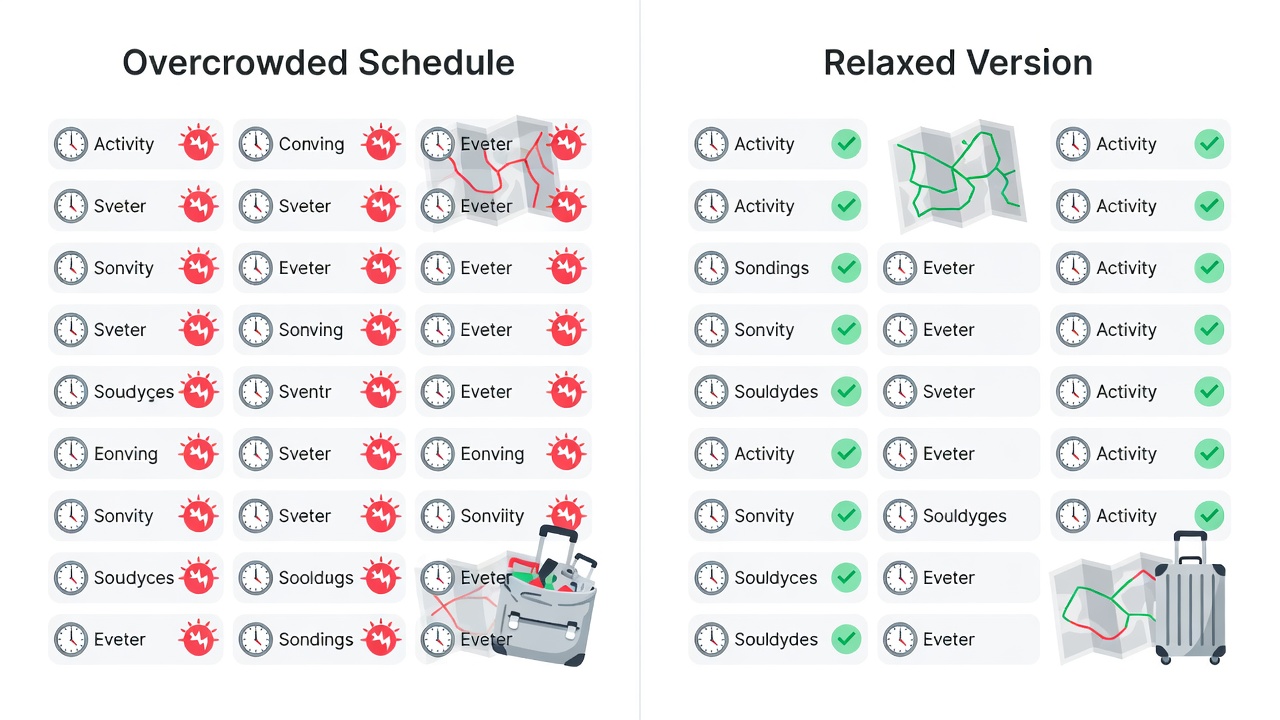
Many first-time planners pack every hour with activities, leaving no flexibility. A classic example is attempting to visit five cities in seven days across France and Germany. This leads to burnout and missed experiences as travelers rush between sites without time to savor them. In busy 2026 seasons, popular attractions often have long lines that compound the problem, turning what should be highlights into sources of frustration.
Fix: Limit major activities to two or three per day. Use the 80/20 rule—plan 80% of your time and leave 20% open. For a Paris itinerary, focus on the Louvre in the morning and a Seine walk in the afternoon, rather than cramming Versailles the same day. Break down your days by neighborhood to minimize travel time between sights. Consider grouping similar activities, such as all museums on one day and outdoor explorations on another, to maintain energy levels throughout the trip.
Before-and-After Example
| Before | After |
|---|---|
| Day 1: Eiffel Tower, Louvre, Notre-Dame, evening cruise | Day 1: Eiffel Tower morning, Louvre afternoon, free evening for local dining |
Mistake 2: Ignoring Buffer Time for Delays
Travelers often schedule tight connections without accounting for flight delays, traffic, or weather. In 2026, with increased air traffic, this mistake causes missed trains or attractions. For instance, planning a same-day connection from Rome to Athens without extra time can leave you stranded when flights are delayed by even 30 minutes. Weather disruptions in mountainous regions or strike actions in major hubs further complicate tight schedules.
Fix: Add at least 2-3 hours between connections and one full buffer day per week. Check U.S. Department of State travel resources for real-time alerts before finalizing. Build in flexible booking options that allow changes without penalties. When traveling by train in Europe, select routes with multiple daily departures so a missed connection does not derail the entire day. Always review historical delay data for your specific airports or stations to anticipate common issues.
Mistake 3: Overlooking Local Transport Realities
Assuming Uber or taxis work everywhere ignores realities like limited service in rural Japan or strike-prone European trains. Popular routes such as Bangkok to Chiang Mai suffer when planners ignore overnight bus schedules or ferry timings affected by monsoons. In island destinations, last-minute boat cancellations are common, stranding travelers who failed to research alternatives like domestic flights.
Fix: Research apps like Rome2Rio early and build in alternatives. Download offline maps and test local options like Japan’s JR Pass for efficiency. Test multiple transport modes during planning, including public buses and walking routes in city centers. For Southeast Asia trips, factor in traffic patterns during peak hours and consider private transfers for remote areas where ride-sharing is unreliable. Always confirm operating hours and seasonal changes directly with operators.
Mistake 4: Failing to Personalize Around Interests
Generic itineraries copied from blogs ignore individual preferences. A foodie might hate museum-heavy days, while history buffs skip beaches. This results in dissatisfaction even when the itinerary covers top attractions. For example, a couple visiting Bali might follow a standard temple-and-beach template when one partner prefers hiking volcanoes and the other wants cooking workshops.
Fix: Start with your top three interests. For an Italy trip, a food lover could swap the Vatican for a Tuscan cooking class. Create a simple ranking system for must-see versus nice-to-see items. Discuss priorities with travel companions early and allocate separate days for divergent interests when traveling in a group. Incorporate hidden gems that align with hobbies, such as street art tours for creatives or wine tastings for enthusiasts.
Mistake 5: Skipping Cost Contingency Steps
Budgets break without padding for price hikes or emergencies. 2026 travelers face fluctuating fuel costs and dynamic pricing on attractions. Unexpected expenses like medical needs or extended stays due to weather can quickly exceed initial projections if no reserve exists.
Fix: Allocate 15-20% extra. Use apps that track price changes and set alerts. See guidance from CDC Travelers’ Health for health-related costs. Maintain a separate digital folder for receipts and monitor exchange rates daily if traveling internationally. Review cancellation policies for all bookings to avoid losing deposits on changes.
Comparison Table: Sample 10-Day Europe Itinerary
| Aspect | Flawed Version | Improved Version |
|---|---|---|
| Daily pace | 6+ attractions | 2-3 attractions + rest |
| Transport | No buffers | 3-hour connections |
| Personalization | Standard sights | Interest-based choices |
| Budget handling | Zero contingency | 15-20% reserve |
Expert Tips for 2026 Apps and Adjustments
Tools like Google Trips updates and specialized planners allow real-time edits. Enable notifications for weather and transport strikes. Test apps during planning to ensure offline functionality works on your route. Integrate calendar apps with itinerary software to visualize daily flow and spot overloads quickly. Many travelers now use AI-powered suggestion features in apps to generate alternative activities when plans change unexpectedly.
Real-World Examples from Popular Routes
Consider a 14-day Thailand itinerary that previously crammed Bangkok, Chiang Mai, Phuket, and islands without buffers. The improved version dedicates full days to each region with built-in rest and transport flexibility. In Europe, a rail-focused trip from Paris to Barcelona benefits from avoiding back-to-back high-speed trains by inserting a relaxed stop in Lyon. These adjustments prevent the common regret of returning home without truly experiencing destinations.
Quick Checklist Before Booking
- Review daily activity count and cap at three major items
- Add buffer days and connection times
- Verify local transport options and alternatives
- Align plans with personal interests through ranking
- Build 15% cost buffer and track expenses
- Test apps for offline use and alerts
FAQ: Handling Last-Minute Changes
How do I adjust for sudden flight cancellations?
Rebook via airline apps first, then use buffer time to shift activities. Contact your accommodation to request flexible check-in if needed.
What if weather disrupts outdoor plans?
Have indoor alternatives ready, such as museums or markets. Many cities offer covered walking tours or cooking experiences as backups.
Can I recover from an overloaded first few days?
Yes, by trimming the remaining itinerary and adding rest stops. Communicate changes to travel companions immediately.
Are there reliable sources for 2026 transport updates?
Consult Lonely Planet travel resources alongside official transport sites for the latest schedules and advisories.
Conclusion
By addressing these five mistakes, you’ll craft itineraries that deliver enjoyment without exhaustion. Start small, test your plan, and embrace flexibility for memorable 2026 adventures that leave you energized rather than depleted.


No comments yet. Be the first!