 PlaceBee

Introduction to Sustainable Travel in 2026
As travelers increasingly seek meaningful experiences that protect the planet, sustainable travel itineraries have become essential for 2026. This guide helps eco-conscious explorers design low-impact vacations that reduce environmental harm while deepening cultural connections. From choosing responsible transport to selecting community-based lodging, every decision matters. With climate concerns rising, 2026 offers new opportunities for responsible tourism. Emerging destinations are prioritizing conservation, making it easier than ever to travel ethically and create lasting positive change for both people and ecosystems.
The shift toward sustainability is driven by growing awareness among travelers who want their adventures to align with environmental values. Rather than simply visiting popular sites, modern itineraries emphasize regeneration, education, and genuine community engagement. This approach transforms vacations into opportunities for personal growth and planetary stewardship.
Why Focus on Low-Impact Itineraries Now?
Global tourism recovery post-pandemic has highlighted the need for mindful travel. Sustainable options minimize carbon footprints, support local economies, and preserve natural sites for future generations. Research from UNWTO emphasizes that responsible planning can cut emissions significantly while enhancing immersion. In addition, many destinations now face overtourism challenges that degrade resources and strain infrastructure. Choosing low-impact routes helps distribute visitor benefits more evenly and protects fragile ecosystems from further damage.
Travelers in 2026 also benefit from improved technology and policy support that make green choices more convenient. Governments and private sectors are expanding rail networks, incentivizing electric mobility, and certifying sustainable operators, creating an environment where responsible travel is both accessible and rewarding.
Selecting Green Transport Modes
Transportation often accounts for the largest share of trip emissions. Prioritize these options for 2026: electric trains and high-speed rail for inter-city travel, electric vehicles or hybrid rentals for road trips, biking and walking tours within destinations, and shared shuttles or public transit over private flights. Compare these to standard flights, which produce far higher emissions per passenger. For long-haul journeys, consider one-way rail combinations to reduce overall impact while enjoying scenic landscapes that flying overlooks.
Practical tips include booking rail passes in advance, using apps to compare carbon outputs across routes, and combining transport modes creatively, such as ferry plus train for coastal regions. These choices not only lower environmental harm but often provide richer, more relaxed travel experiences.
Community-Based Lodging Choices
Stay in locally owned eco-lodges, homestays, or certified sustainable hotels. These options channel funds directly to communities and often incorporate renewable energy and waste reduction. Examples include solar-powered cabins in rural areas or village guesthouses that employ residents and source food locally. Avoid large resorts that strain resources; instead, seek certifications like GSTC for verified practices. Research platforms that vet properties for genuine sustainability commitments rather than superficial claims.
When selecting lodging, read recent guest reviews focused on environmental practices, confirm waste management policies, and inquire about how the property supports surrounding communities. This due diligence ensures your stay contributes meaningfully to local well-being.
Carbon-Offset Activities Across Regions
Incorporate activities that actively restore environments. Tree-planting excursions in Southeast Asia, reef restoration in the Caribbean, or wildlife monitoring in Africa provide hands-on offsets. These experiences also foster deeper cultural understanding. Partner with verified programs to ensure genuine impact rather than greenwashing. In South America, travelers can join river cleanup projects, while European options often include rewilding initiatives in national parks.
Always request documentation of measurable outcomes from organizers and consider combining offsets with educational workshops on local conservation challenges for maximum value.
Practical Steps to Build a Sample 10-Day Itinerary
Follow these steps to create your own plan: assess your starting point and choose rail or EV routes first, select 2-3 regions with strong sustainability credentials, book community stays in advance, schedule offset activities mid-trip, and track daily metrics using apps. Allow flexibility for spontaneous low-impact discoveries.
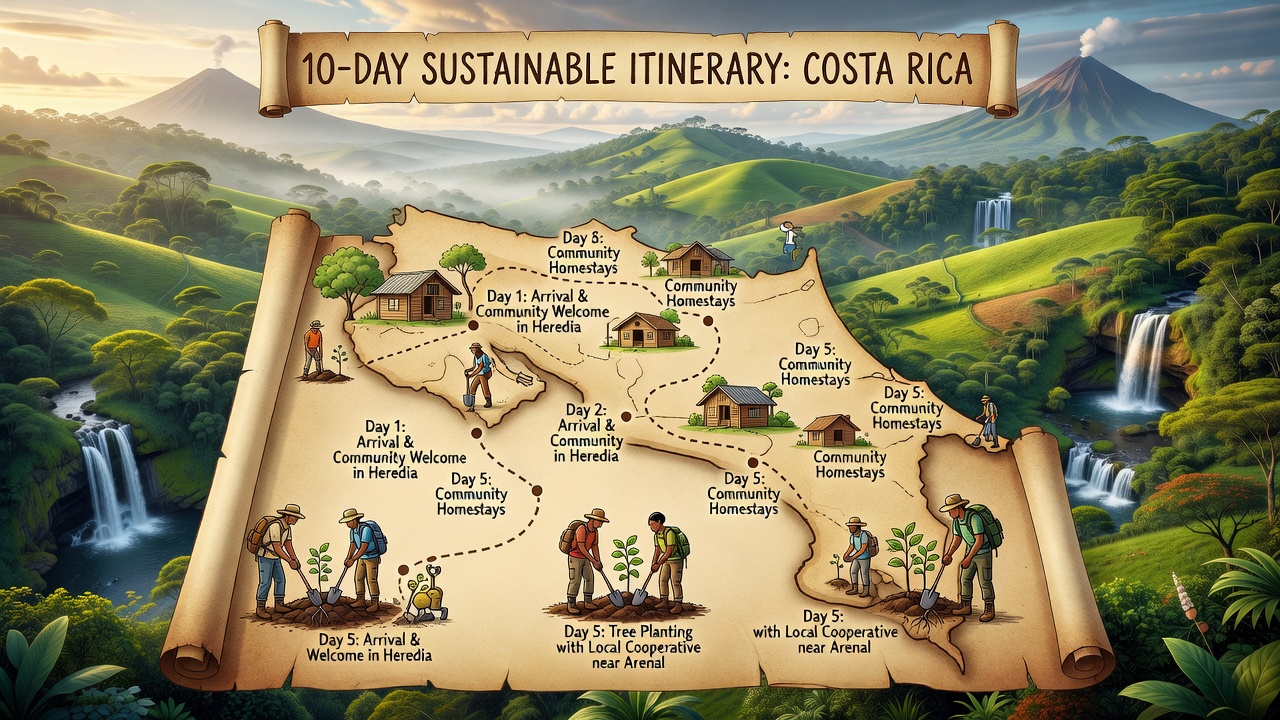
Sample 10-Day Eco-Itinerary: Costa Rica and Nicaragua
Day 1-2: Arrive via train to San José, transfer to electric shuttle for Monteverde cloud forest homestay. Spend evenings learning about local reforestation history from hosts.
Day 3-4: Hiking and birdwatching with local guides; participate in reforestation projects planting native species. Evenings include cultural storytelling sessions.
Day 5: Cross border sustainably by boat to Nicaragua's Ometepe Island for volcanic community lodge. The boat journey itself supports small-scale fishing cooperatives.
Day 6-7: Kayaking and organic farming workshops that teach traditional agricultural techniques still used by island residents.
Day 8-9: Beach conservation activities near the coast, including sea turtle monitoring and mangrove restoration alongside scientists.
Day 10: Return via low-emission transport while reflecting on the journey through a group debrief with guides.
This itinerary emphasizes immersion over rushed sightseeing and demonstrates how every day can blend adventure with tangible environmental contributions.
Comparisons: Sustainable vs Standard Options
Sustainable choices often cost similar or slightly more upfront but deliver long-term value through preserved destinations and authentic experiences. Standard packages may save time but contribute to overcrowding and higher emissions. For instance, a rail journey versus flying reduces impact dramatically while offering scenic views and opportunities to interact with locals along the route. Sustainable itineraries also tend to include smaller group sizes, leading to more personalized encounters and reduced pressure on popular sites.
Real-World Examples from Emerging Destinations
Bhutan’s high-value, low-impact model limits visitor numbers while funding conservation through tourism fees. Slovenia’s green tourism initiatives feature extensive bike networks and zero-waste villages that have become models for European sustainability. These spots showcase how policy and community effort create model itineraries. Patagonia’s community-led treks in Chile offer another blueprint for balancing access with protection, where local guides share ancestral knowledge of the land. In Southeast Asia, Vietnam’s community-based tourism projects in the Mekong Delta allow visitors to stay with farming families and participate in sustainable rice cultivation.
Each destination illustrates that thoughtful planning can turn tourism into a force for good when local voices lead the way.
Tips for Tracking Sustainability Metrics
Use apps to log transport emissions, water usage, and waste. Set goals like offsetting 100% of flights and measure progress daily. Tools from organizations like WWF provide simple calculators tailored for travelers. Review your footprint weekly and adjust plans accordingly for continuous improvement. Consider journaling qualitative impacts such as cultural exchanges or wildlife sightings to gain a fuller picture of your trip’s positive effects.
Mistakes to Avoid in Sustainable Planning
Common pitfalls include over-relying on carbon offsets without reducing actual emissions, choosing operators with unverified claims, and neglecting accessibility considerations for all travelers. Another frequent error is packing too much into an itinerary, which increases transport needs and reduces time for meaningful engagement. Always verify claims through multiple sources and prioritize quality experiences over quantity of activities.
Frequently Asked Questions
How much more do sustainable trips cost?
They vary but often align closely with standard trips when focusing on value rather than luxury. Community stays can be more affordable while providing richer cultural access.
Are eco-itineraries accessible for all budgets?
Yes, by prioritizing public transport and homestays, many options fit mid-range travelers without sacrificing impact or comfort.
What if I have limited time?
Focus on regional rail trips or weekend offsets to start small and scale up as schedules allow.
How do I verify if an operator is truly sustainable?
Look for third-party certifications, recent independent reviews, and transparent reporting on environmental and social outcomes.
Can families or groups travel sustainably?
Absolutely. Many community lodges accommodate multiple guests, and group rail travel further reduces per-person emissions.
Conclusion
Designing sustainable travel itineraries for 2026 empowers you to explore responsibly. By integrating green transport, community lodging, and meaningful activities, your trips can protect destinations while creating unforgettable memories. Start planning today and join the movement toward better tourism that benefits both travelers and the places they visit.

No comments yet. Be the first!